Sleep deprivation fogs your mind, and all you crave are a few uninterrupted hours.
But what if there was a solution?
Ever heard of a night doula?
In this article, we’ll give you everything you need to know about what is a night doula and why they’re worth every $.
These postpartum supports offer more than just a helping hand; they bring peace, rest, and a touch of normalcy back into the lives of weary new parents.
So, what is a night doula?
A night doula is someone who provides care, support, and guidance to new parents and their infants during the night.
They are a mix between a night nanny and a baby nurse, stepping in so you can have some ‘me time’ and get some much-needed rest.
Unlike other types of doulas, night doulas specialise in overnight care, focusing on everything from feeding and changing diapers to soothing and settling your baby back to sleep.
They might even do your laundry and cook up a storm during the night.
How do they differ from other healthcare providers, like baby nurses, midwives and postpartum doulas?
Well, the key lies in their approach, areas of expertise and scope of practice.
While baby nurses and midwives have a medical or nursing background, focusing on the physical care of the baby, night doulas bring a more holistic support system into the picture.
They care for the baby but also provide invaluable support and advice to parents, helping them navigate the murky waters of early parenthood with confidence.

What are the benefits of a night doula?
When welcoming a night doula into your home, the benefits are significant.
Studies show that hiring a night doula is linked with huge improvements in parents’ sleep quality.
Getting good-quality sleep plays a pivotal role in recovery and adapting to parenthood once your baby is here.
Sleep affects everything from how you adjust to the mental challenges of your new role to physical healing after childbirth.
Parents also experience lower stress levels, reduced mood swings and even lower chances of postpartum depression.
A night doula’s assistance can help you have a deeper understanding of a baby’s cues and needs.
This understanding improves bonding, fosters secure attachments and promotes infant well-being, laying down a resilient foundation for the new family structure.
With the support of a night doula, parents are often better prepared to tackle the hurdles of having a newborn.
What do night doulas offer?
Newborn care
This includes the basics like feeding, diapering, and soothing.
Whether it’s mastering the art of swaddling or deciphering different cries, night doulas have the expertise to handle it all, ensuring your baby is content and well-cared for.
Sleep routine establishment
Night doulas are armed with strategies to help establish healthy sleep routines for your baby.
This benefits the child in the long run and also helps parents get more consistent rest.
Emotional support for parents
Transitioning to parenthood can be a rollercoaster of emotions.
Night doulas provide a listening ear and reassurance, making them a great source of emotional support during this vulnerable time.
Feeding support
Whether you’re breastfeeding, bottle-feeding, or a bit of both, night doulas offer guidance and support to make feeding a h*ll of a lot easier.
This can be particularly beneficial in the early days of establishing breastfeeding, offering tips and techniques to help both mother and baby.

Night feeding with your doula
Breastfeeding
Night doulas are well-versed in the ins and outs of breastfeeding, from helping maintain a healthy milk supply to offering latching assistance.
They allow mothers to breastfeed their babies during the night without fully waking, making it easier to drift back to sleep afterwards.
By handling the logistics—bringing the baby to you for feeding and then taking care of settling them back to sleep afterwards—the doula makes night-time breastfeeding an easier process for everyone involved.
Bottle feeding
Whether it’s expressed breast milk or formula, night doulas are great at handling bottle feeds.
They can prepare bottles, feed the baby, or support parents who choose to do so themselves, ensuring that babies receive the nutrition they need with minimal sleep interruption for parents.
The effects of sleep-deprivation
The impact of sleep deprivation isn’t just feeling tired.
As mentioned earlier, It can lead to a range of health and psychological issues, from impaired immune function to heightened stress and anxiety.
Health and psychological impacts
Chronic sleep loss can affect everything from your mood to your physical health, increasing the risk of conditions like obesity, diabetes, and heart disease.
It also takes a big toll on your mental health, with increased risks of postpartum depression, anxiety, and cognitive impairment.
How doulas help
By taking over night-time care duties, a night doula gives parents the opportunity to have longer stretches of undisturbed sleep.
This support can significantly reduce the negative effects of sleep deprivation, helping parents stay healthier and more emotionally balanced.
How much do night doulas cost?
Hiring a night doula can cost between $25 to $65 USD every hour.
This depends on where you live, how experienced the doula is, and what service they offer.
It might seem like a lot to pay, but when you think about the immense benefits they can have on your family’s health and happiness, many families find they’re worth every penny.
Some insurance companies are starting to cover the cost of hiring a doula as they’re recognising doula support as an essential service.
And if you don’t have insurance or your insurance doesn’t cover it yet, you can always ask for people to put money towards hiring a doula instead of buying you baby shower gifts.

Choosing your night doula
Finding the right night doula requires some research and thoughtful consideration. Here are some steps to guide you through the process:
Step 1 — Research
Start by exploring doula directories, such as blissfulbirths.co to find potential candidates.
These platforms can offer a wealth of information and make it easier to locate doulas in your area.
You can also ask your family and friends if they know any that they can recommend.
Step 2 — Interviewing
Once you’ve narrowed down your options, set up interviews with the doulas.
This is your chance to ask about their experience, approach to care, and availability.
It’s also an opportunity to get a feel for their personality and whether it fits with your family’s vibe.
Step 3 — Alignment with family values and needs
It’s important to find a doula that understands and aligns with your family’s values and needs.
Discuss your parenting philosophy, your expectations for night-time care, and any specific support you’re looking for.
Whether it’s experience with twins, knowledge of breastfeeding, or a gentle approach to sleep training, make sure your doula can meet your needs.
A happier and healthier postpartum
Thinking about hiring a night doula?
It might be the kind of postpartum support you need.
It’s not just an investment in sleep; it’s about making life with your little one smoother and happier.
Every family’s needs are unique, but a night doula adapts to yours, offering just the right kind of support.
So, if you’re on the fence, why not look into it?
A night doula might be just what you need to transform those tough nights into something a bit more manageable, letting you and your family enjoy this special time to the fullest.
]]>It’s an adventure filled with joy, challenges, and a steep learning curve.
This is why new parents are hiring postpartum doulas after their little one arrives.
So what is a postpartum doula?
A postpartum doula provides support to families that, let me tell you, is worth every penny.
They offer a range of services including emotional support, practical help around the home, insider tips on baby care and feeding and a h*ll of a lot more.
Ultimately, they’re there to help you find your feet in the first few weeks of parenthood.
Sounds like something you need?
We’ve broken down what is a postpartum doula and put together a list of 13 reasons why hiring one might just be the best decision you make for your family.
What is a postpartum doula?
A postpartum doula is a helping hand for new parents right after their baby is born.
They’re different from birth doulas, who are there during pregnancy and support the mother through the labour and birth of their baby.
Postpartum doulas are there immediately after the baby arrives and normally stay for 6 weeks postpartum.
Some doulas offer the whole package, pregnancy, birth, postpartum — the whole shebang.
So, what do they do?
A lot, actually.
They’re there to listen and give emotional support when things feel tough.
They can also do practical stuff around the house, like making meals, tidying up, and even looking after the baby so you can have a moment to yourself.
This can be really handy when you’re tired and trying to figure out ‘how to do the parenting thing’.
They know everything there is to know when it comes to taking care of newborns, from feeding to getting them to sleep.
But it’s not about doing things for you; it’s about teaching you and building your confidence.
They don’t do medical stuff but are all about support and care, making those first few weeks with a new baby a bit easier.
Reason 1: Emotional support
The days following birth can be emotionally intense.
You might feel joy, exhaustion, and everything in between.
A postpartum doula offers you and your partner emotional support.
They create a space where you can talk openly about how you’re feeling without fear of judgment.
Whether you’re dealing with the ‘baby blues’ or just need to vent about the day-to-day challenges of parenthood, a doula listens and understands.
Their presence provides reassurance, reminding you that you’re not alone and it’s okay to have mixed emotions during this time.
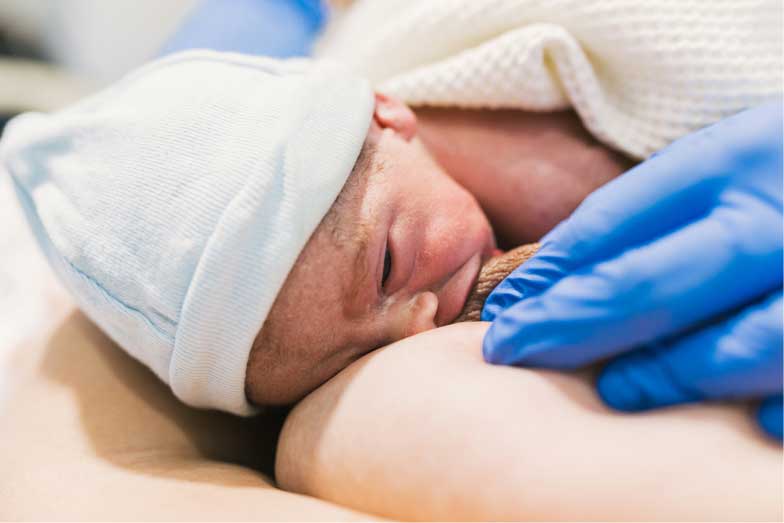
Reason 2: Breastfeeding guidance
It’s no secret that breastfeeding is hard work and can be filled with ups and downs.
From latching issues, painful nipples and leak disasters to concerns about milk supply and mastitis, it’s easy to throw in the towel.
Many postpartum doulas also have lactation support qualifications.
They can offer tips on positioning, advice on how to encourage a better latch and support to make breastfeeding more comfortable for both you and your baby.
Having someone to guide you through this process at home means you can find solutions that work for your unique situation, making breastfeeding a more positive experience.
Plus, their support can boost your confidence, helping you feel more connected to your baby.
Reason 3: Newborn care tips
I’m sure you’ve heard the term ‘Babies don’t come with instruction manuals’.
It’s true.
When it comes to taking care of a newborn, many parents feel like they’ve been given a Rubix cube and told to figure it out.
Postpartum doulas are great at giving simple, practical tips that make a big difference.
They can show you things like how to swaddle your baby, help you understand what different cries mean, and share ways to soothe your little one.
Reason 4: Coping with sleep deprivation
Lack of sleep is something every new parent goes through, but it doesn’t have to knock you off your feet.
Postpartum doulas have the best tips to help you handle it.
They can give you tips on setting up a good sleeping space for your baby and suggest routines to help your baby sleep better and longer.
They can also give you education about the benefits of cosleeping and baby massage.
Sometimes, they can even look after your baby while you get some much-needed sleep.
There are even special doulas that will stay awake during the night to be there for the baby and whatever they need.
These are called night doulas, and they are a godsend for sleep-deprived parents.
Once you find a rhythm that works for you, you’ll have more energy to tackle the new challenges that come with motherhood.
Not to mention sleep is one of the key ingredients to a speedy postpartum recovery.
Reason 5: Household help
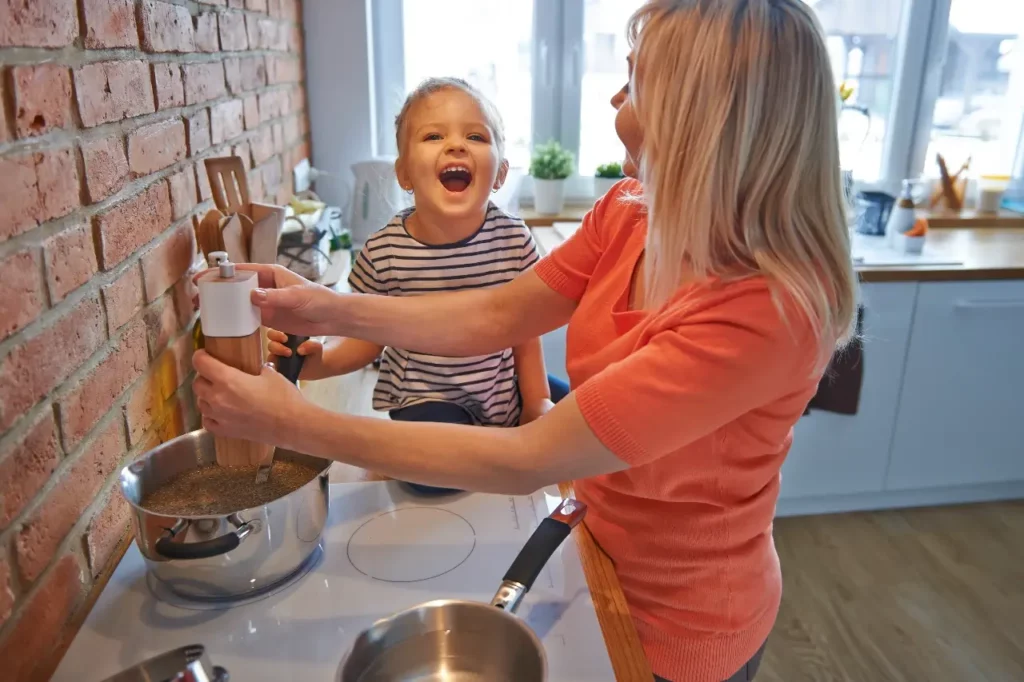
A postpartum doula offers an extra pair of hands when you really need it.
They help with household chores like washing clothes, making healthy meals, or tidying up the house.
They might even walk your dog and take your other kids out for a bit.
All the things that you don’t have the headspace or energy to deal with in the weeks following the birth.
This kind of help is a big relief for new parents who are busy with their baby and might feel swamped.
It means you can spend more time with your little one instead of worrying about all the housework that isn’t being done.
Reason 6: Support for the whole family
A postpartum doula isn’t just there for the mum and bub.
They’re there for everyone in the family.
They can help partners too, giving them advice, showing them how to care for the baby, and even giving them tips on how they can support the mum better.
And for the other siblings? The doula can help them understand what is going on and how they can help out too.
This makes sure everyone feels more confident and supported.
Having a doula around can make the whole family’s adjustment to a new baby smoother and more positive.
Reason 7: Mental Health Awareness
Navigating the emotional rollercoaster after having a baby can be tough.
Doulas are great at spotting the signs of postpartum depression (PPD) and anxiety, which is a big deal because catching these feelings early makes a huge difference.
In fact, research shows that women who had doula support during labour, birth and postpartum saw a whopping 64.7% drop in the chances of experiencing postpartum anxiety or depression.
That’s impressive.
Doulas aren’t therapists, but they know the importance of getting the right help, and they also have an extensive list of contacts for times like these.
They can gently suggest seeing a professional if they think it’s needed, and help you find someone who you are comfortable with.
This makes it easier for parents to seek support in the early stages.

Reason 8: Physical Recovery Tips
Let’s be real, your body goes through a lot during birth, and the aftermath can feel like you’ve run a marathon, and then some more.
Doulas come armed with tips and tricks to help your body recover.
They can suggest comfortable positions for feeding your baby, show you gentle exercises to strengthen your core when you’re ready, and remind you to drink plenty of water.
They have secret remedies for sitz baths, steaming broths and delicious teas that make postpartum recovery a lot faster… and a bit more like a day at the spa.
They help you take it easy while encouraging you to take small steps towards recovery.
It’s not about rushing; it’s about finding the right pace for your body.
With a doula’s guidance, you can navigate the physical recovery process with a bit more ease and maybe even a few laughs along the way.
Reason 9: Nutritional Advice
Eating right after having a baby isn’t about getting back in shape;
It’s important to fuel your recovery and, if you’re breastfeeding, for milk production too.
Doulas can guide you through the maze of postpartum nutrition, suggesting meals that are not only nourishing but also boost your milk supply.
They know that a well-balanced diet can make a significant difference in how you feel and how well you can feed your baby.
Their advice is practical, focusing on foods that are easy to prepare and rich in the nutrients new mums need most.
With a doula’s guidance, you can ensure your body gets the right fuel to heal and provide for your baby.
Reason 10: Education on Baby Development
As I mentioned earlier, babies don’t come with manuals, but luckily, doulas pretty much serve as the next best thing.
They can teach you about the different stages of baby development, so you’re not left wondering why your newborn suddenly seems to think sleep is optional.
Plus, they’re like baby whisperers, able to tell you exactly what each cry means—hungry, tired, or in need of a clean nappy.
This is priceless, turning you into a bit of a baby whisperer yourself.
It’s not magic, just the wisdom passed on from someone who’s been there, done that, and got the baby vomit-stained T-shirt to prove it.

Reason 11: Community Resources
Finding your tribe as a new parent can feel a bit like online dating but without the awkward dinners.
Doulas are great at connecting you with local community resources and support groups, making it easier to find people who get what you’re going through.
They know all the best spots for parent-and-baby classes, breastfeeding support groups, and even coffee mornings.
With a doula’s help, you won’t just survive the early days of parenthood;
You’ll thrive, surrounded by a community of new parents who are going through it too.
Reason 12: Flexible Support Customised to Your Needs
Every family is unique, and doulas get that.
They’re like chameleons, adapting their support to match exactly what you need.
Whether that’s someone to talk to about your birth experience, a guide to your baby’s first weeks, or just an extra pair of hands when you’re at your wit’s end.
They can dial up the emotional support, share more practical baby care tips, or step back to give you space, depending on your day.
It’s this flexible, tailor-made approach that makes doula services so valuable.
You’re not getting a one-size-fits-all solution;
You’re getting the support that feels like it was designed just for you and your baby, making the whole parenting journey feel a bit more manageable.
And a lot less lonely.
Reason 13: Building Your Confidence as a New Parent
Becoming a new parent often brings a lot of self-doubt.
Research shows that hiring a doula postpartum helps to boost new mums’ (and dads’) confidence.
This kind of support is great for parents who feel a bit isolated or who don’t have much help.
Doulas are all about helping you trust yourself more.
They’re there to remind you that you’ve got this, what you’re going through is normal, you know your baby best, and you’re doing a good job.
This kind of encouragement is a big help for your mental health.
Parents who have a doula feel stronger and more sure of themselves, not just right after the baby is born, but as they continue on their parenting journey.

Finding the Right Postpartum Doula for You
Finding a doula that fits your needs can make a big difference in your postpartum experience.
Start by looking in local parenting groups or doula directories.
When you have a few names, reach out and ask them about their experience, how they support new parents, and what their approach to care is.
It’s important to choose someone who you feel comfortable with and whose views on caring for a newborn align with yours.
Asking the right questions is key to understanding if a doula is the right match for you.
Ask about their experience with breastfeeding support, how they handle situations where you and your baby are struggling, and how they can support your partner too.
You want someone who listens to your concerns and respects your choices.
When you find a doula who understands what you’re looking for and offers the support you need, you’ll feel more at ease and supported during this big change in your life.
Going It Alone Isn’t Your Only Option
Stepping into parenthood is a big move, and it’s totally fine if the idea of doing it solo is a bit daunting.
Remember, having a postpartum doula by your side can make a world of difference.
They’re there to guide you through the new terrain of caring for a newborn, lifting your spirits, and taking some of the weight off your shoulders.
From helping you understand your baby’s needs to boosting your confidence and providing much-needed reassurance, a doula’s impact is significant.
It’s about enhancing your strengths and giving you the support you need to thrive, not just survive.
And let’s be honest, everyone needs a bit of help sometimes.
If you’re considering a doula, why not reach out for a chat?
A consultation doesn’t tie you down to anything—it’s just a first step to see how a doula could fit into your family’s journey.
It’s about finding what works for you and embracing the support that could make all the difference.
So, take a breath and consider opening the door to a helping hand—you might just find it’s exactly what you need.
]]>It happens so fast and sometimes catches us off guard.
As the temperatures drop, we bundle ourselves up in cosy layers to stay snug and warm.
But what about our little ones?
Dressing infants for winter can be a challenge.
In this article, we’ll explore the top five essential winter clothes for infants to ensure they stay comfortably warm and cosy during those chilly months.
So, grab a cup of hot cocoa and let’s dive in.
Navigating Your Baby’s First Winter
The joys of experiencing your baby’s first winter.
It’s a whole new adventure filled with cuddles, hot cocoa, and adorable winter outfits.
But when it comes to dressing your Infant, there are a few things to consider.
Here are some key factors to keep in mind while choosing winter clothes for infants:
Material
Opt for soft, gentle fabrics like cotton, bamboo or fleece that won’t irritate your baby’s delicate skin.
Avoid materials that may cause itching or discomfort.
We all know an uncomfortable baby is an unhappy baby.
Warmth
Look for clothing items that provide ample warmth without being too bulky.
Thin layers with good insulation are ideal to regulate your baby’s body temperature.
Bamboo is known for its thermoregulating qualities.
Texture
Pay attention to the texture of the clothing.
Smooth, non-scratchy fabrics are generally more comfortable for babies.
Breathability
While keeping your baby warm is essential, it’s equally important to choose breathable fabrics to prevent overheating.
Look for clothes that allow airflow to keep your little one cosy and comfortable.
Again, bamboo is a great choice.
Layers
Layering is the key to adapting to changing temperatures.
Dress your baby in multiple thin layers that can be added or removed as needed to keep them cosy without overheating.
Age and Sizing
Babies grow quickly, so be mindful of choosing the right size.
It’s best to opt for slightly larger sizes to accommodate growth and ensure comfortable movement.

Checklist of Essential Winter Baby Gear
Now that we know what to keep in mind, let’s dive into the essential winter baby gear you’ll need to keep your little one snug as a bug.
Winter Baby Onesies
Baby onesies are a staple in any infant’s winter wardrobe, but did you know there are different onesies for different seasons?
In winter, you’ll want to look for onesies that provide an extra layer of warmth.
These’ll have long sleeves and be made from thicker materials like fleece or cotton blends.
Remember to choose onesies with easy-to-use snaps or zippers for quick diaper changes.
Snowsuit/Bunting
When the snow starts falling, it’s time to break out the snowsuit or bunting.
A snowsuit is like a cosy full-body winter outfit for your little munchkin. It typically features insulation, a water-resistant outer layer, and attached mittens and booties.
Reserve the snowsuit for colder days or when you plan to spend time outdoors.
Mittens, Hats, and Booties
Accessories are the cherry on top of your baby’s winter ensemble.
Mittens, hats, and booties are essential for keeping those tiny fingers, ears, and toes warm and protected.
Look for soft, stretchy mittens that won’t restrict movement.
Hats with ear flaps or a snug beanie are perfect for shielding your baby’s sensitive ears.
And those adorable booties?
They’ll keep little feet toasty as you explore the winter wonderland.
And if you’re looking for the perfect baby shower present, these are all great choices.

How to Layer Your Baby’s Clothing?
By layering your baby’s clothing, you can easily adjust their comfort level as temperatures fluctuate throughout the day.
Plus, it’s much easier to remove a layer if your little one starts feeling too warm.
For Indoor Comfort
When you’re indoors, aim to keep your baby comfortably warm but not overheated.
Remember, babies have a harder time regulating their body temperature than we do.
Opt for a breathable onesie as the base layer, and add a lightweight sweater or cardigan if needed.
Keep blankets nearby for extra snuggles during naptime.
Venturing Outdoors
Heading out for a winter stroll or a snowy adventure?
Layering is essential here.
Start with a onesie or a base layer, add a sweater or a jacket, and top it off with a snowsuit or bunting.
Don’t forget the accessories – hats, mittens, and booties will keep your baby protected from the chilly air.
Adjust the layers based on the temperature and your baby’s comfort level.
Safely Strapped
If you’re travelling by car or pram, ensure your baby is dressed comfortably and safely strapped.
Avoid bulky clothing that may interfere with the straps’ effectiveness.
Instead, dress your baby in thinner layers and use blankets or covers to keep them warm during the journey.
How to Dress Your Baby for Bed
Bedtime can be a tricky time when it comes to dressing your little one for winter nights.
Here are a few different ways you can dress your baby for bed:
Swaddle
For newborns, swaddling can provide a sense of security and warmth.
Swaddle your baby in a soft and breathable muslin wrap and then add a blanket, making sure their face is uncovered for easy breathing.
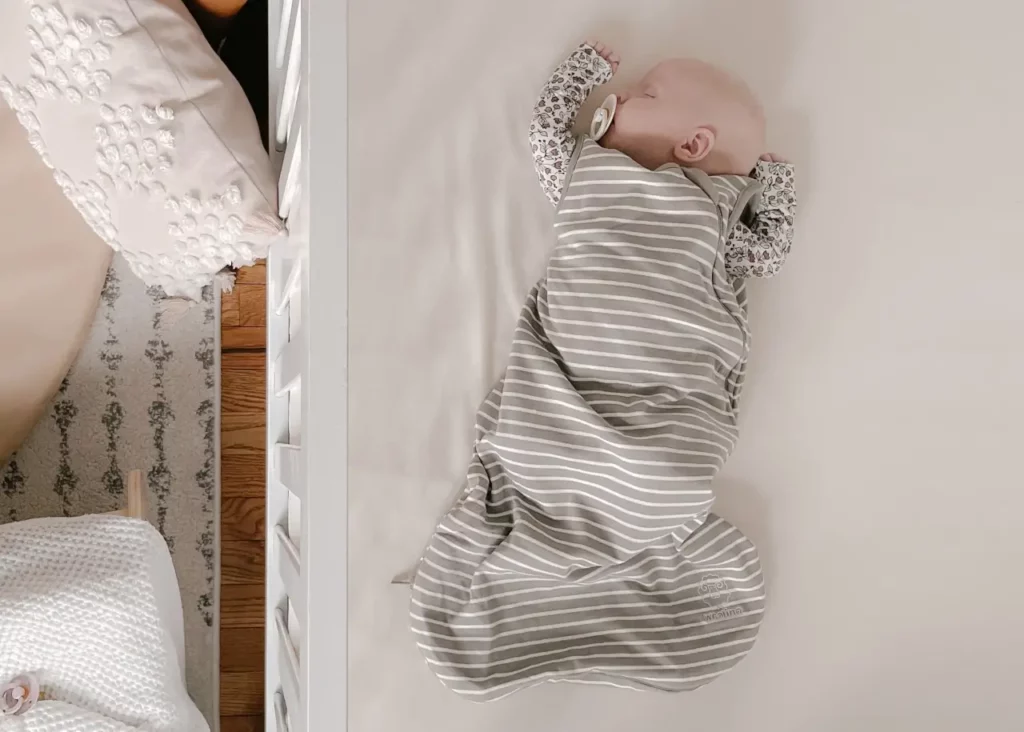
Sleep Sack
As your baby grows, you can transition to sleep sacks.
These wearable blankets come with armholes or sleeves, providing freedom of movement while keeping them cosy and safe.
Onesie
If the room temperature is mild, a comfortable onesie may be all your baby needs for a good night’s sleep.
Opt for long-sleeved onesies made from soft, warm and breathable fabric.
Remember, it’s essential to consider the temperature in the room and adjust your baby’s clothing accordingly.

Some great picks for winter baby clothes
Now that we’ve covered the basics, I’ve compiled some options to get you started on your hunt for winter clothes for infants:
Baby snowsuit: Columbia snuggly bunny bunting
- Perfect for the coldest environments, it offers optimal protection.
- Water and wind-resistant taffeta shell keeps the winter elements at bay.
- The interior hood and arm sleeves are lined with a velvety soft microfleece.
- Fold-over hand and feet enclosures ensure extra warmth for your baby.
Winter jacket: The North Face baby reversible perrito hooded jacket
- Made of 100% fleece and reversible for versatile styling.
- Water-repellent on both sides, it’s ready for wet weather adventures.
- The three-piece hood and fold-over mitts keep your baby’s head and hands snug.
- Plus, it’s made with 75% recycled and responsibly sourced materials, making it an eco-friendly choice.
Sleep sack: Kyte Baby soft bamboo sleeping bag
- Crafted from Bamboo Rayon Fabric, offering softness and breathability.
- Has a zipper flap at the top to avoid irritation while your little one sleeps.
- It’s quilted inside to prevent the inner lining from bunching up, ensuring maximum comfort.
- With a wide range of colours and patterns, you’re spoilt for choice.
Baby blanket: Konssy baby blanket
- Made with a 100% cotton (Muslin) front and ultra-soft dot fleece fabric on the back.
- This warm and durable double-layer blanket is gentle on your baby’s skin.
- It’s large enough to easily wrap or swaddle your little bundle of joy.
- this is a great gift for a baby shower.
Winter booties: Burt’s Bees baby booties
- Made from 100% cotton, these booties are perfect for sensitive skin.
- They have a snap ankle secure fit with two adjustment options for a snug fit.
- Combed and ring-spun for durability and softness.
Baby hat and mitten set: 7AM baby hat & mittens set
- The hat has an adjustable 2-snap neck closure and Sherpa lining for warmth.
- The mittens have a fold-over hook & loop closure and inner palm grip.
- With wrist elastic and side snaps to attach the pair together, you don’t have to worry about lost gloves.
- The plush lining, water-repellent soft outer shell, and soft insulation make this set great for colder temperatures.
Enjoy Winter with Your Baby
Finally, remember, the goal is not just to keep your baby warm but also to enjoy the season.
Winter is a magical time for children, full of new experiences.
The sight of the first snowfall, the feeling of a snowflake on the skin, the fun of a sleigh ride – these are all experiences that you and your little one can enjoy.
Dressed in the right winter clothes for infants, your baby can enjoy their first winter safely and comfortably.
So, whether you’re indoors sipping hot cocoa or outdoors building a snowman, with these suggestions for winter clothes for infants, your baby will be ready.
Embrace the cold, enjoy the snow, and make beautiful winter memories with your baby!
]]>Sibling relationships form some of the longest bonds we have in our lifetime.
The introduction of a new baby into a family, while exciting, can be a huge change for older siblings.
It’s not just about the first meeting – though that is crucial.
It’s about creating a bond that will last a lifetime, a bond that starts from the first introduction and continues to grow over the years.
In this article, we’re going to walk you through a carefully curated 7-step process to introduce your older children to their new sibling.
These are practical steps that you can incorporate into your family’s routine.
Starting from the moment you find out about your pregnancy up until you’ve all adjusted to your new family dynamic.
Let’s get started.

Preparing to introduce siblings
Step 1 – Start early
An essential first step when introducing siblings to a new baby is to begin preparations early.
As the saying goes, “forewarned is forearmed,” and providing plenty of notice and education about the upcoming addition to the family will help older siblings adjust to the idea.
Engage your children in conversations about your pregnancy.
Explain that a new member is joining the family, and do this in a way that suits their level of understanding.
This could be as simple as saying that mommy is growing a new brother or sister in her tummy.
Invite your children to prenatal visits if it’s feasible and appropriate.
They can listen to the baby’s heartbeat or even see the baby during ultrasound screenings.
These experiences help make the pregnancy more tangible for them and can build excitement about the new arrival.
You might also find children’s books and stories about new babies and siblings particularly helpful.
There are many beautifully illustrated, engaging books available that tackle the topic in a sensitive, fun, and engaging way.
Reading these together can help your child visualise the changes that are about to occur and set the stage for a smooth transition.
Step 2 – Answer their questions
As the pregnancy progresses, your older child or children are bound to have questions about the new baby.
Embrace this curiosity.
Keeping open communication about their feelings and fears is key to helping them feel secure.
Respond to all of their questions honestly, using age-appropriate language.
If they ask where babies come from, provide a simple explanation that fits their level of understanding.
If they ask about why mom’s belly is growing, you can explain it’s because the baby is growing.
Furthermore, it’s important to discuss what changes the new baby will bring.
Younger children may not understand that babies require a lot of care and won’t be playmates right away.
You might explain that babies sleep, eat, and cry a lot, but soon they’ll grow and become more interactive.
When tackling these questions, remember to keep your tone positive and reassure your older child that your love and attention for them will remain steadfast.
This two-step process helps to prepare them, laying the groundwork to successfully introduce siblings to the new baby and fostering a loving bond between them from the start.
How to introduce siblings
Step 3 – Make the first meeting special
Now you’ve spent many months preparing them for this event — how to introduce siblings in the right way?
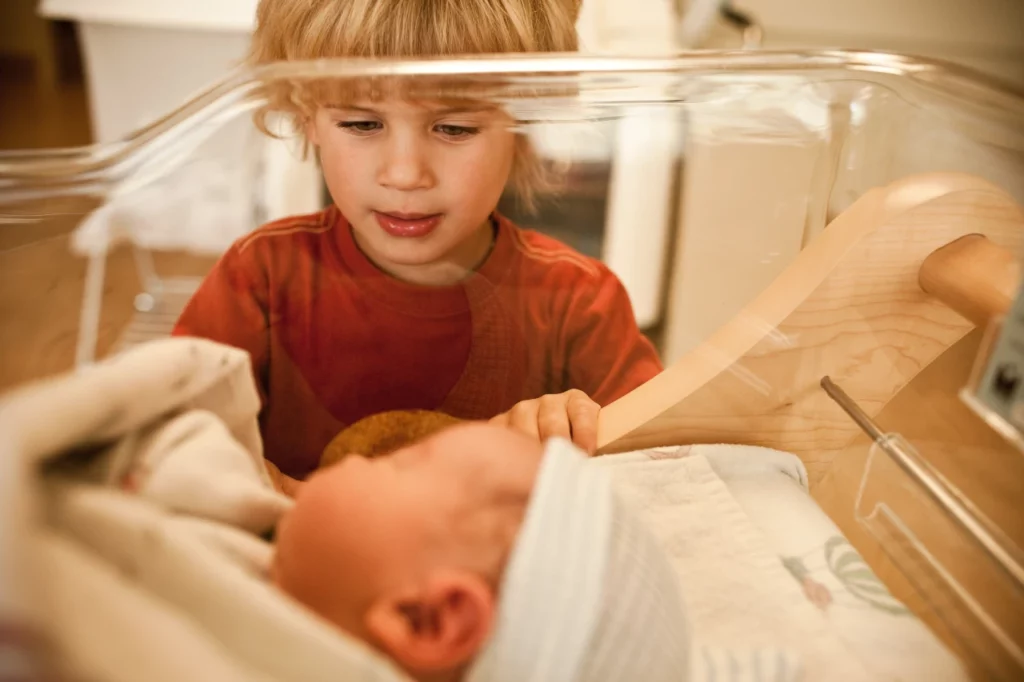
The first meeting between siblings is a momentous occasion and should be treated as such.
It can shape the initial feelings and attitudes the older sibling will have towards their new sister or brother.
To ensure a positive start, it’s important to arrange the first meeting in a neutral, comfortable space.
This could be a quiet corner of your living room or even a favourite park, provided the baby is ready for an outing.
This helps prevent the older sibling from feeling like their personal space is being invaded.
Furthermore, empowering the older sibling with a special role during the meeting can contribute to a sense of responsibility and involvement.
This role could be as simple as helping to unwrap the baby’s new blanket or reading their favourite picture book to the baby.
An excellent way to create a positive connection from the start is to let the older sibling offer a gift to the baby.
This could be a stuffed animal, a drawing they made, or a new baby book.
Step 4 – Encourage gentle interaction
After the initial introduction, fostering gentle interaction between the new baby and their older sibling is crucial.
Older siblings should be taught safe ways to touch and hold the baby.
Simple instructions such as using “gentle hands” or showing them how to support the baby’s head can go a long way in ensuring the safety of the newborn.
It’s also important to talk about hygiene when interacting with the baby.
Children should be encouraged to wash their hands before touching the baby and be aware of not sharing their food or drinks with the newborn to avoid any potential illness.
Finally, help the older sibling feel like they are contributing to caring for the baby.
This could mean asking for their assistance during bath time, letting them choose the baby’s outfit for the day, or helping to gather diaper supplies.
These shared tasks can give the older sibling a sense of pride and foster a caring attitude towards their younger sibling.

Adjusting siblings to new life
Step 5 – Balance your time
Navigating the waters of postpartum life while simultaneously tending to your other children’s needs is a delicate dance.
It’s crucial to keep a harmonious balance that ensures everyone feels included and loved.
Implementing techniques for giving siblings attention while caring for a new baby is essential.
You can involve older siblings in the baby’s care routines like diaper changes, bathing, or bedtime stories, provided they are interested and willing.
This not only gives you some much-needed assistance but also helps them feel involved.
Look for activities that can engage everyone in the family.
For instance, taking a walk with the baby and siblings can be a great bonding time.
Or maybe a cosy family movie night where the baby can sleep nearby, and the siblings can enjoy some cuddly time with you.
Importantly, remember the value of one-on-one time with older siblings.
It can be as simple as reading their favourite book, playing a quick board game, or just chatting about their day.
These interactions, even if they’re brief, can provide assurance that they’re still uniquely cherished, despite the new addition to the family.
Step 6 – Foster their bond
It’s during this adjustment stage that the foundation of the sibling bond begins to solidify.
One of the best ways to encourage this is by suggesting activities they can do together to strengthen their bond.
An older sibling can engage in simple activities like singing to the baby, showing them colourful toys, or even just chattering away about their day – babies love listening to voices!
Regularly praising older siblings when they are kind or helpful with the baby can encourage such behaviour to continue.
Affirmations like, “You’re such a good big brother/sister” or “Baby loves it when you…” can go a long way in fostering a positive relationship.
Despite your best efforts, there may be times when older siblings exhibit signs of regression or jealousy, which is completely normal.
They may resort to babyish behaviour or act out to get your attention.
It’s essential to handle these situations delicately.
Maintain patience, openly discuss their feelings, and reassure them of their importance in the family.

The lifelong relationship
Step 7 – Keep communication open
One of the best strategies to maintain a healthy relationship between your children is to keep the lines of communication wide open.
This involves regularly checking in with your older child about their feelings and emotions, which might vary and change over time.
Start by making it a habit to have frequent, casual conversations about their day, their likes and dislikes, and most importantly, their thoughts about the new baby.
Encourage them to share any worries, fears, or concerns they might have, making sure they know that their feelings are valued and respected.
As your children grow, issues of sibling rivalry or feelings of neglect may naturally arise.
Address these concerns proactively rather than reactively and in a non-judgmental way.
For instance, if your older child starts acting out to grab attention, rather than scolding them, try to understand the root cause.
They might just be feeling overlooked.
Assure them that their feelings are important and that everyone in the family has enough love to go around.
Lastly, always reinforce the idea of the family team and each member’s special role.
Remind your children regularly that every family member is unique and brings something special to the family dynamics.
The older sibling’s role is especially important—they’re not just a brother or sister, but a role model for their younger sibling.
Encourage them to take this role to heart, involving them in small, age-appropriate tasks to help with the baby.
By doing this, you can help establish a sense of pride and responsibility in your older child.
When everyone in the family understands and values their unique role, it fosters a sense of unity and harmony—a team where everyone has a place and a purpose.
Embrace the adventure
So there you have it, the ultimate 7-step guide on how to introduce siblings to a new baby.
It’s an art of balancing emotions, nurturing bonds, and ensuring every child feels loved and valued.
But remember, each family and each child is unique, so don’t be discouraged if things don’t go exactly as planned.
The journey towards fostering a strong bond between siblings is one filled with numerous challenges, but the rewards are infinitely more profound.
From their first curious interactions to the development of a deep-rooted connection, the joy and enrichment a sibling relationship brings to a child’s life is unmatched.
As you guide your children through this remarkable journey, bear witness to the blossoming of a lifelong bond.
This is the beginning of a unique relationship that will grow and deepen through shared experiences, laughter, and even the occasional quarrel.
So embrace this adventure, and take heart in knowing that you’re nurturing a bond that will last a lifetime.
]]>But how do you even begin to choose which one is right for you — there are SO many out there to choose from.
In this ultimate guide, we’ll delve into the world of baby carriers, exploring my top 7 best baby carriers that I have personally tried and tested.
But first, let’s cover the basics.
What should you consider when selecting a baby carrier?
Comfort, support, weather suitability, and age appropriateness are key factors.
We’ll dive deeper into these factors and more as we unveil the best baby carriers for effortless parenting.
Babywearing not only increases bonding between parent and bub, but it has some amazing health benefits for both you and your baby.
The days of juggling tasks while carrying your little one are about to become a lot easier.
Buckle up (or should we say, strap in?) as we embark on this exciting journey to find the best baby carrier for you and your precious bundle of joy.
What is a baby carrier?
Before we dive into the world of baby carriers, let’s start with the basics.
A baby carrier is a specially designed device that allows you to carry your baby while keeping your hands free.
It’s like having a cosy, portable nest for your little one right against your chest or back.
Baby carriers come in various styles, each with unique features and benefits.
What are the benefits of babywearing?
Babywearing isn’t just a trend—it’s a game-changer for parents and babies alike.
When you wear your baby, you increase sink-to-skin contact, create a deep bond, and foster a sense of security.
It promotes early attachment, boosts breastfeeding, enhances the baby’s cognitive and motor development and reduces the likelihood of developing postpartum depression.
Plus, it frees up your hands, allowing you to tackle daily tasks while keeping your baby close and content.
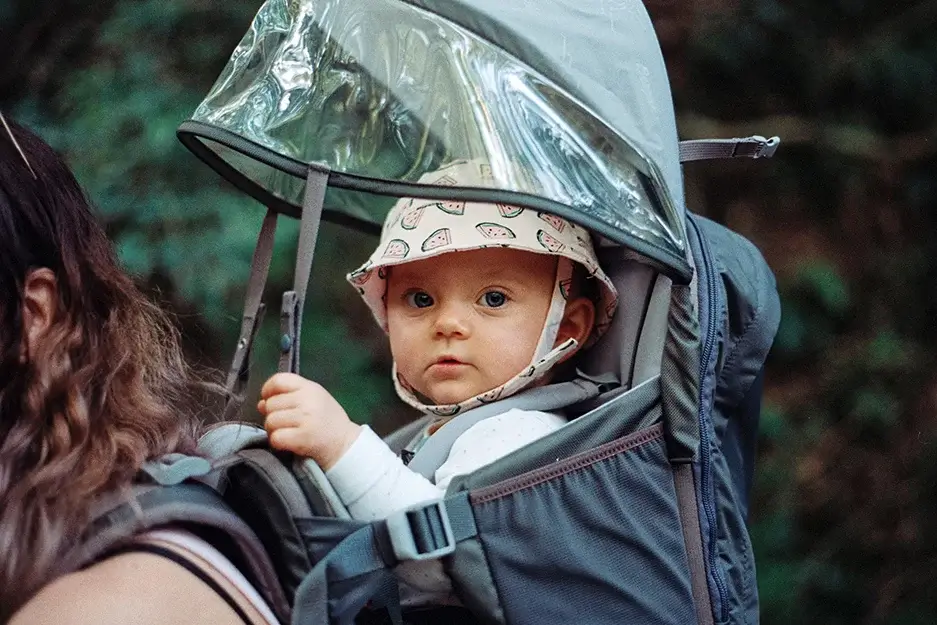
What are the different types of baby carriers?
When it comes to baby carriers, there’s a wide variety to choose from.
You’ll find carriers suitable for newborns and others designed for toddlers.
Different types include ring slings, wraps (stretchy, hybrid, woven), soft structured carriers, and specialised hiking and travel carriers.
Each type offers unique benefits, such as adjustability, breathability, and versatility to adapt to different weather conditions.
Facing in vs facing out carriers— which one is better?
One common question parents have is whether their baby should face inwards or outwards in the carrier.
While both have their merits, facing inwards is generally recommended for newborns and younger babies.
It provides optimal head and neck support and promotes a cosy, secure environment.
As your baby grows older and gains more neck control, facing outwards can be introduced for short periods to allow them to explore the world around them.
What are the different factors to consider when choosing the best baby carrier for you?
Choosing the perfect baby carrier requires considering several factors.
First, think about your baby’s age — some carriers are specifically designed for newborns, while others cater to older infants and toddlers.
Additionally, consider the weather conditions you’ll encounter.
Look for carriers suitable for warm weather or those with additional features for cold climates.
Finally, think about your lifestyle — are you looking for a carrier that’s great for hiking and travel or one that’s perfect for everyday wear and lightweight?
Best wrap baby carrier

Konny baby carrier flex elastech
My favourite wrap baby carrier had to be the Konny Baby Carrier Flex Elastech.
I had a hard time choosing my favourite wrap baby carrier because there are SO many out there.
But when I came across the Konny Baby carrier, it was definitely a winner.
As a busy parent, I loved how this wrap-style carrier made life easier and comfier for both me and my little one.
The polyester-cotton-spandex blend was soft, but the synthetic material wasn’t as breathable as bamboo or linen ones.
I found a lot of the other ones were quite difficult to figure out, but the Konny baby carrier was really easy to slip on over your head and go.
no belts, buckles, or complicated wraps!
The weight distribution was spot-on, alleviating any back or body pain I experienced with some of the others.
It was so easy to work around the house while keeping my baby close and content.
Best ring sling baby carrier

Nalakai ring sling
The Nalakai ring sling was also a hard one to choose, but there were a few things that really made this one stand out from the rest.
- It was made with bamboo and linen blend so it was super soft and gentle on both mine and my baby’s skin – most of the other ones I tried were either synthetic or rough linen.
- Bamboo is also well known for its temperature-regulating properties, which was a big thing for me. As many of you would know, babies, especially newborns, can’t regulate their body temperature very well. The bamboo blend of the Nalakai ring sling managed this really well.
- Lastly, 5% of profits go to families in need through Cepia, helping support those less fortunate. If there’s something that you should know about me, is that I’m big on giving back. I believe that giving to the less fortunate can help in so many ways.
I love ring sling baby carriers because of their design.
They are designed to carry babies in the safest carry position for correct hip development.
They’re also really easy to use and adjust.
Best soft structured baby carrier
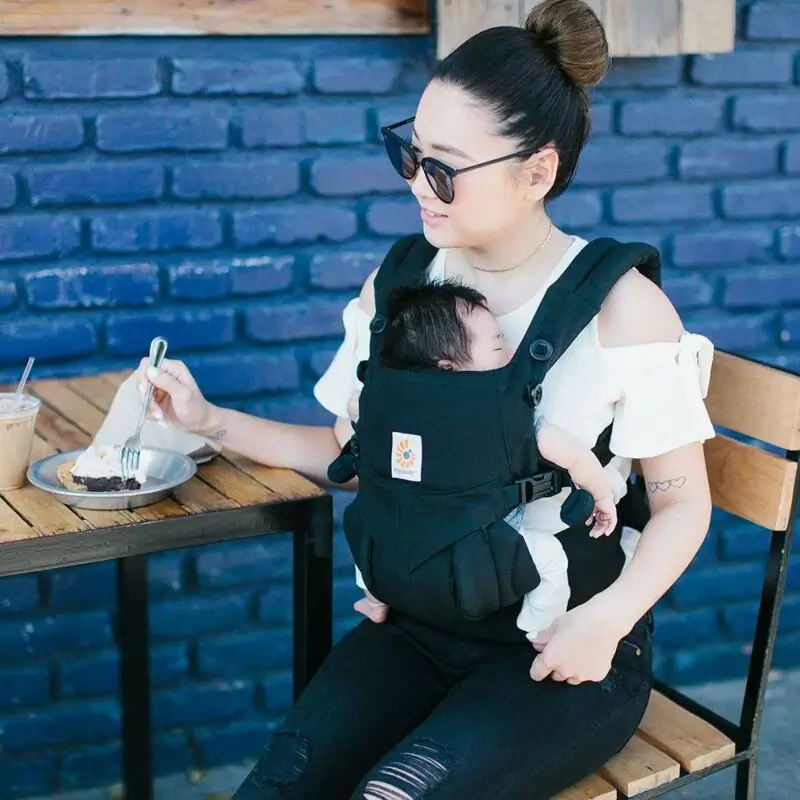
Ergobaby omni 360
With soft structured baby carriers, I actually couldn’t find one that I liked.
I’ve always found them so chunky and hot.
I chose the Ergobaby Omni 360 as my favourite soft structured baby carrier firstly because it’s super light and not too bulky with extra nick-nacks.
The shoulder straps can be crossed over, and it’s quite comfortable compared to some other ones I tried.
I loved that this baby carrier is one that grows with your baby – you can use it from the very beginning until the very end, and you can wear it so many different ways.
I found this baby carrier quite versatile in the way that it can be used to pop out to the shops, go out to lunch with your friends, travelling and even short hikes.
It saves you from having to buy several different carriers, which is a bonus.
The last feature I loved was the built-in hood which provided extra sun protection for my little one and offered privacy for breastfeeding.
Definitely, my recommendation if youre looking for something a little more versatile than the last two mentioned.
Best hybrid baby carrier
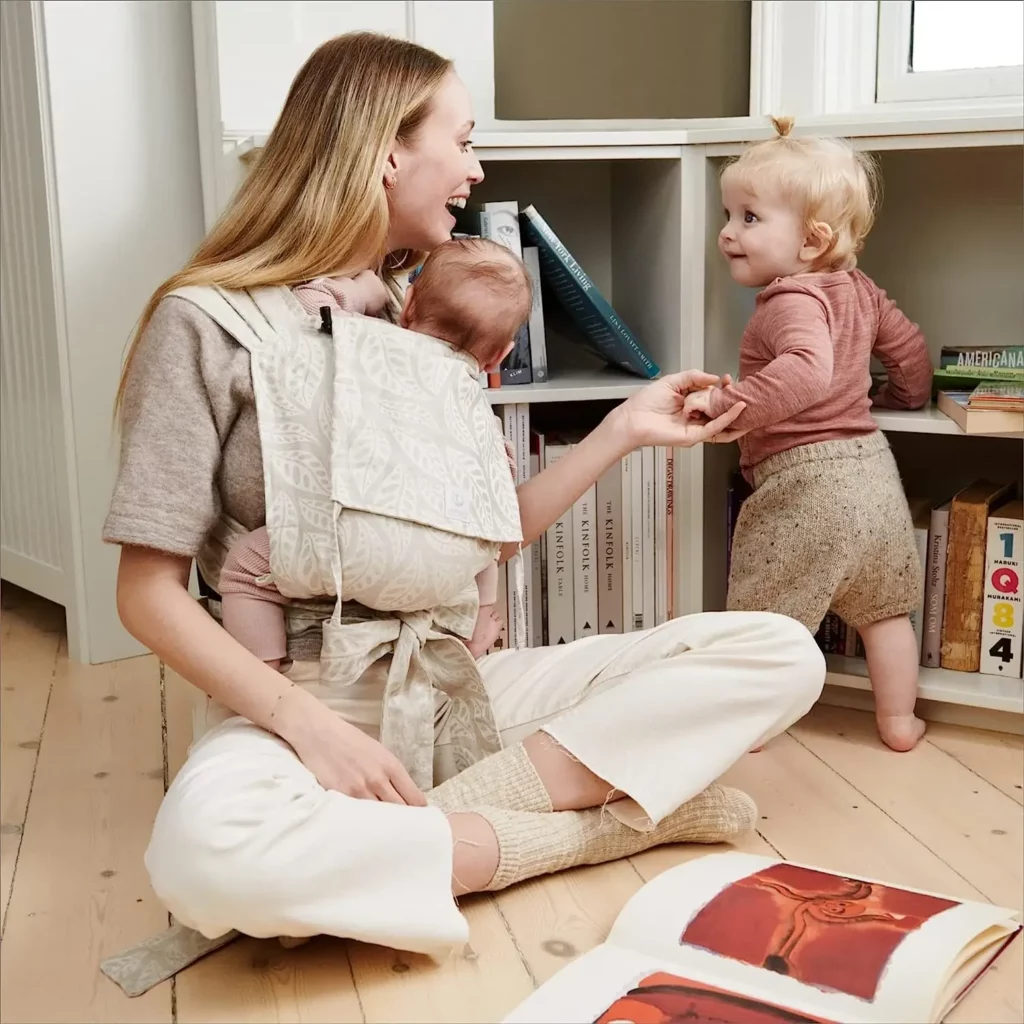
Stokke Limas Carrier
Let’s talk about hybrid baby carriers… what exactly are they?
Well, they are a mix between a wrap and a soft structured baby carrier.
They have a few more clips and a lot less bulk.
In other words, if you’re looking for something a bit more hardy and supportive than the wrap or sling carrier but you don’t want something quite as bulky as a soft-structured one, this is the perfect baby carrier for you.
After trying about three different hybrid baby carriers, I found the Stokke Limas Carrier, and I knew it was a keeper.
It has three carrying options: front, back, and hip.
So you can choose what works best for you.
And just like the Omni 360, it grows with your baby.
You can start using it from birth up to 33 lbs.
The Stokke Limas Carrier comes in so many beautiful designs, so you’re really spoilt for choice.
However, I have to admit, the cotton material, while marketed as “soft,” leaned towards the scratchier side for me.
Keep that in mind if your baby has sensitive skin.
Overall, this hybrid baby carrier was definitely one I had to include on my list.
If you have an active lifestyle and you find you’re out of the house and babywearing a lot, this is definitely one I would recommend for you.
Best hip baby carrier
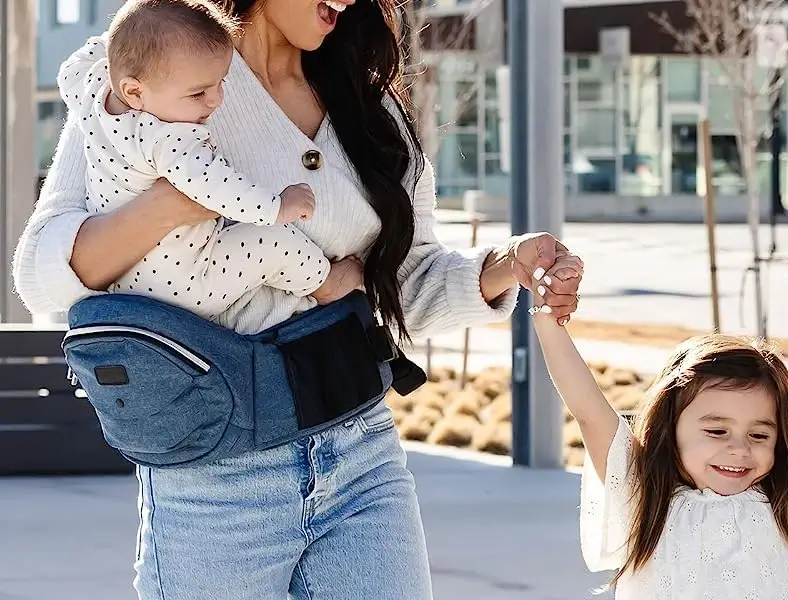
TushBaby Hip Seat Baby Carrier
I’m sure a lot of you know the pain and exhaustion that comes with having a toddler, especially one that is always wanting to be carried.
Your back, hips and arms get so sore and tired… no you’re not getting old, we are all in the same boat.
If you haven’t tried a hip baby carrier, I would definitely recommend the TushBaby seat baby carrier.
I was sceptical at first, thinking, “This isn’t even going to work”.
But let me tell ya, it was actually so handy.
While the carrier doesn’t offer complete hands-free freedom since you still have to hold your baby upright, it’s worth mentioning that it significantly reduces painful spine curvature.
Trust me, that relief alone is priceless.
And it was surprisingly light and made it so much easier to carry my little one without tiring so quickly.
As your little one grows and starts to run around, sometimes you need something that you can just pop on.
Although the storage pockets weren’t large enough to carry things like nappies for an entire day, they were still handy for essentials like keys and a phone.
Best hiking baby carrier

Osprey Poco Plus Child Carrier
As I mentioned earlier, babywearing can actually do wonders for your child’s development.
It’s true!
A great way to stimulate you’re child’s brain is to taking hiking
Recently, my husband and I and been getting more into hiking… for hours.
At first, we tried to go with the soft structured baby carrier but it got a little uncomfortable after a while and so we decided it was time to invest in a proper hiking baby carrier.
And hiking baby carriers are definitely an investment.
The one we finally decided to buy after looking for a few weeks was the Osprey Poco Plus Child Carrier.
I don’t regret my decision…
One of the things we loved about the Poco Plus is its great features.
It has a built-in sunshade so you can make sure your little one is safe from the sun.
Plus, it has a drool pad that is removable and washable, which is a total sanity-saver when they’re going through their teething phase.
The Osprey Poco Plus baby carrier is also super comfortable with tonnes of padding and even has adjustable foot stirrups for growing little ones.
This carrier has plenty of space to stash extra snacks and layers, making it perfect for all our hiking essentials.
Rain or shine, the Poco Plus was up for the challenge.
I have to say, it’s worth every penny.
Best front-facing baby carrier
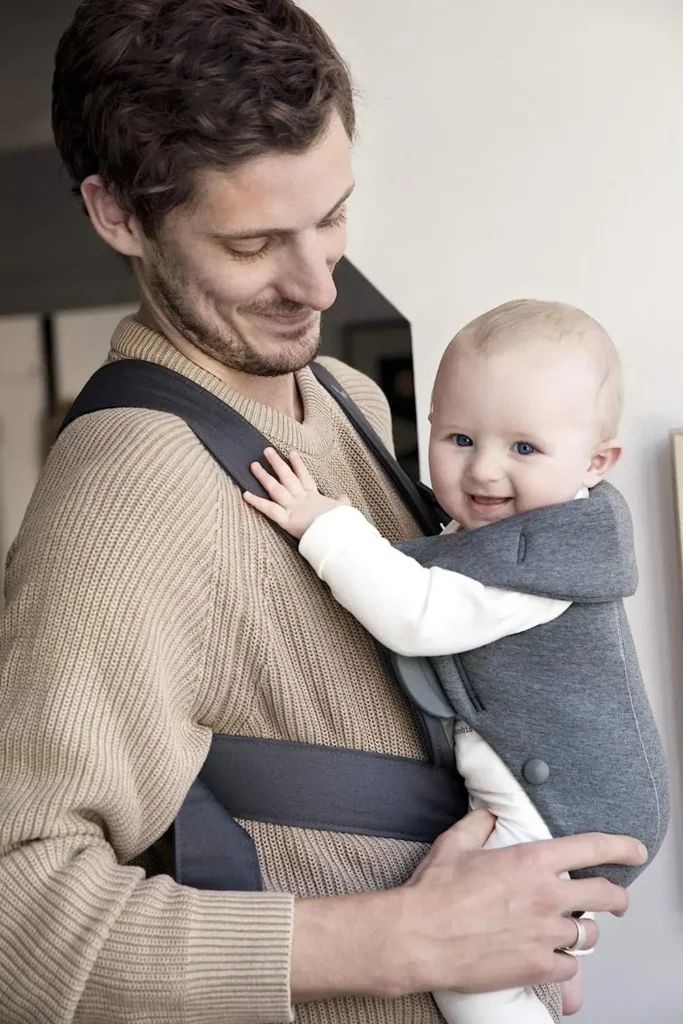
BabyBjörn Baby Carrier Mini
Last but definitely not least on our list is the BabyBjörn Baby Carrier Mini, a great choice if you’re looking for a front-facing baby carrier.
The first thing that caught my attention was its perfect design for newborns.
Yes, I know what you’re thinking… newborns aren’t meant to sit front-facing.
You’re also able to use this baby carrier as a normal soft structured baby carrier which I found really handy.
The adjustable seat and head support provide good support for your baby as they grow, and it was so easy to put on and take off.
The materials were ultra-soft and lightweight, not to mention machine-washable.
The last thing you want is a messy mishap in a baby carrier that you can’t clean.
The BabyBjön baby carrier mini was great for both hot and cold climates and also appropriate for strolling on the beach or carrying around the shops.
So, if you’re looking for a front-facing baby carrier that checks all the boxes, the BabyBjörn Baby Carrier Mini is a top contender.
It’s perfect for newborns up to approximately 12 months, making it an investment that lasts.
Time to find the perfect baby carrier that suits your needs
As we wrap up this ultimate guide to choosing the best baby carrier, I hope you’re feeling more confident about finding the one that’ll suit you.
We’ve explored some great options to suit different needs and conditions.
Remember, when you’re choosing the right baby carrier for you, babywearing not only strengthens the bond between parent and child.
It also offers remarkable health benefits for both of you.
Baby barriers also make the perfect baby shower gift.
The convenience of having your hands free while keeping your baby close is truly invaluable.
So, embrace the joy and ease that a well-chosen baby carrier brings to your daily routine.
]]>In these formative years, every hug, every kiss, and every giggle lays a brick in the foundation of the world of attachment and trust.
Imagine if there was a way to hold your little one close while going about your daily activities.
Welcome to the world of babywearing, a practice that transforms parenting into a hands-free operation without sacrificing a smidgen of closeness.
In fact, babywearing is an extraordinary tool that strengthens that crucial bond between parent and child.
What is Babywearing?
Babywearing, in its simplest definition, is the practice of keeping your baby close and connected to you as you engage in daily activities.
It’s a cosy concept, isn’t it?
This is achieved by using various types of baby carriers, which are cleverly designed tools that support your baby while leaving your hands free.
There are numerous styles to choose from, including wraps, slings, mei-tais, and structured carriers, each offering unique benefits and suiting different needs.
Just like finding the perfect pair of jeans, it’s all about finding what fits and feels right for you and your little one.

The Rich History of Babywearing
If you thought babywearing was a trendy, modern concept, you’d be surprised to know that it’s as old as human civilization itself.
Throughout history, various cultures across the globe have embraced babywearing for its practicality and the closeness it brings.
From the back-strap looms of Mayan mothers, and the cradleboards of Native American tribes, to the simple yet efficient kangas of Africa, babywearing has been an integral part of child-rearing.
As societies evolved, so did babywearing practices.
The modern carriers we see today are a reflection of this rich tapestry of history, stitched together by generations of parental love and ingenuity.
The Science Behind Babywearing
Don’t let the simplicity of babywearing fool you.
This practice triggers some pretty fascinating biological responses that foster a strong bond between parent and child.
For starters, babywearing promotes skin-to-skin contact, which can lead to the release of oxytocin, often referred to as the “love hormone.”
This hormone enhances feelings of affection and attachment, paving the way for a profound emotional connection.
Furthermore, babywearing aligns perfectly with the principles of Attachment Theory, suggesting that close physical contact with parents promotes security and healthy emotional development in infants.
An increasing body of research underpins the numerous benefits of babywearing.
From boosting breastfeeding success to reducing crying and promoting better sleep, science adds an authoritative voice to what parents have known instinctively for generations –
babywearing creates an empowering bond, filled with love and trust.

Babywearing Benefits
Let’s move from the ‘what’ and the ‘why’ to the ‘wow.’ Here’s a run-down of some fabulous benefits of babywearing:
#1 – Improves Parent-Baby Bonding
Babywearing is the go-to strategy for boosting the bond between you and your tiny bundle of joy.
When you’re wearing your baby, you’re not just carrying them, you’re also nurturing a deep, lasting connection.
What’s the secret ingredient in this heartwarming recipe? Skin-to-skin contact.
This close cuddle-fest supercharges the release of oxytocin – the so-called ‘love hormone’.
So, each time you wear your baby, you’re not only creating a snuggle party for two, but you’re also sparking a domino effect of attachment, warmth, and pure, unadulterated love.
And I’m not just pulling this out of thin air.
A study by Bystrova et al. (2009) found that skin-to-skin contact between parents and their newborns immediately after birth led to significantly higher maternal attachment scores.
So, babywearing is more than just a parenting trend – it’s the secret sauce to an incredible bond with your baby.
#2 – Boosts Brain and Social Development
Little minds are like sponges, and when you wear your baby, you’re inviting them to soak up the world from a prime vantage point.
From this cosy perch, babies learn about communication, social cues, and language, simply by watching and listening to you.
Studies found that babies carried for at least one hour daily scored better on the Bayley Scales of Infant Development, a key measure of cognitive and motor development.
So, with every step you take, you’re not just getting from A to B, you’re taking strides towards your baby’s intellectual growth.

#3 – Reduces Crying and Emotional Stress
Swaddled in the comforting confines of a carrier, babies find themselves in a sweet cocoon of security and bliss.
They tune into the reassuring lullaby of your heartbeat, paired with the gentle ebb and flow of your breath – a soothing serenade reminiscent of their cosy, womb-time memories.
This sensory symphony helps to dial down the fuss and turn off the waterworks.
And what’s better – babywearing actually helps decrease cortisol levels, the infamous ‘stress hormone.’
So, while your little one is nestled close, their brains are telling them that it’s time to relax and rest.
And let’s not forget the parental perks. With less crying and a happy, snug-as-a-bug baby, parents find their own stress levels also decrease.
The result? A harmonious environment where everyone’s happy hormones are on the rise!
#4 – Better Sleep for Both Mum and Bub
Rocking a baby to sleep has been a parent’s go-to move since the beginning of time.
This is just yet another great benefit of babywearing.
As you sway your way through your day – much like what you did when you were 9 months pregnant, your baby is getting swayed to sleep.
This also helps establish better sleep patterns for bub over time.
Plus, with the baby sleeping soundly, parents can also catch a wink or two.
And if you’re really struggling to get shut-eye, you can always hire a doula.
A well-rested baby equals a well-rested parent, it’s a win-win!
#5 – Reduces Postnatal Depression
Postnatal depression is a heavy cloud that can cast a shadow over the early days of motherhood.
Studies have indicated that the physical closeness encouraged by babywearing can help keep this cloud at bay.
A 2016 study found a significant decrease in postnatal depression scores for mothers practising skin-to-skin contact, a key aspect of babywearing.
So, while you’re cradling your baby close, you’re also holding onto an effective tool to protect your mental health.
Babywearing, it seems, is more than just a parenting practice—it’s an embrace that keeps giving, one step at a time.

#6 – Helps Preemie Development
For those tiny warriors who step into the world a little earlier than expected, the journey is filled with numerous challenges.
Preemies, often require extra care and support for their developmental milestones.
This is why babywearing is super important.
Research reveals that kangaroo care, or skin-to-skin contact through babywearing, aids in the development of premature infants.
In fact, studies have found that preterm infants who experienced kangaroo care showed better cognitive development and executive functions later in life than those who didn’t.
#7 – Increased Milk Supply
Talk about a win-win situation.
Babywearing not only brings you closer to your little one but also plays a significant role in breastfeeding success.
Wondering how? Well, the close proximity and skin-to-skin contact help maintain hormonal balance, particularly prolactin levels, which aids in lactation.
So, not only does babywearing help your little munchkin feel safe and secure, but it also ensures they are well-fed.
#8 – More Stable Weight Gain
Every parent relishes seeing their little one grow and hit those healthy weight milestones.
Interestingly, babywearing can play a supportive role in this too.
The close contact and movement while babywearing appear to aid digestion and lead to more stable weight gain.
This is because, as mentioned before, skin-to-skin contact reduces stress levels, allowing the baby to switch gears into ‘rest and digest’.
And as a result, also increases their appetites.
#9 – Easier to Exercise and Lose Post-Baby Weight
If you’re a new mother, finding time for yourself, let alone exercise, can seem like an impossible task.
But babywearing is like having your very own portable, cuddly gym.
It allows you to stay active, do light workouts, and even join babywearing dance classes.
This can facilitate postpartum recovery and help lose the baby weight – not that there’s anything wrong with it.
After all, everybody is beautiful, and every mother is a powerhouse.
Babywearing isn’t about promoting unrealistic weight loss ideals but about encouraging healthy activity and self-care for mothers.
Give babywearing a try
With its ancient roots and myriad benefits, it’s no surprise that this practice has stolen the hearts of parents across the globe.
From the oxytocin-fuelled bond, it nurtures to the unique support it lends to our preemie heroes and the quiet yet empowering role it plays in a mother’s postpartum journey.
Remember, babywearing doesn’t come with a guarantee of angelic babies.
But what it does promise is an extra pair of ‘hands’, a stronger bond, and a generous dash of comfort in the whirlwind of parenthood.
As you embark on or continue your journey as a parent, consider giving babywearing a try.
After all, closeness comes in many forms, and sometimes, it’s wrapped up in a cosy carrier, swaying gently to the rhythm of your heart.
]]>I hear you!
I’ve scoured the market and tried out a range of breast pumps to find the top 5 best wearable breast pump for on-the-go mums in 2023.
- I’ve found breast pumps that are gentle and comfortable on your sensitive breasts.
- I’ll explore the most discreet and quiet options for you so you don’t have to worry about those awkward pump noises or feeling self-conscious in public.
- I’ll tell you about the hassle-free alternatives that won’t add extra chores to your already busy life.
- And let’s not forget the importance of that precious bonding time with your baby. I’ve been sure to find the best wearable breast pump out there that allows for skin-to-skin contact, promoting a strong connection while you express milk.
- Plus, we’ve ensured that these wearable breast pumps are portable and fit seamlessly into your daily routine, so you can maintain your active lifestyle.
Best Overall Breast Pump
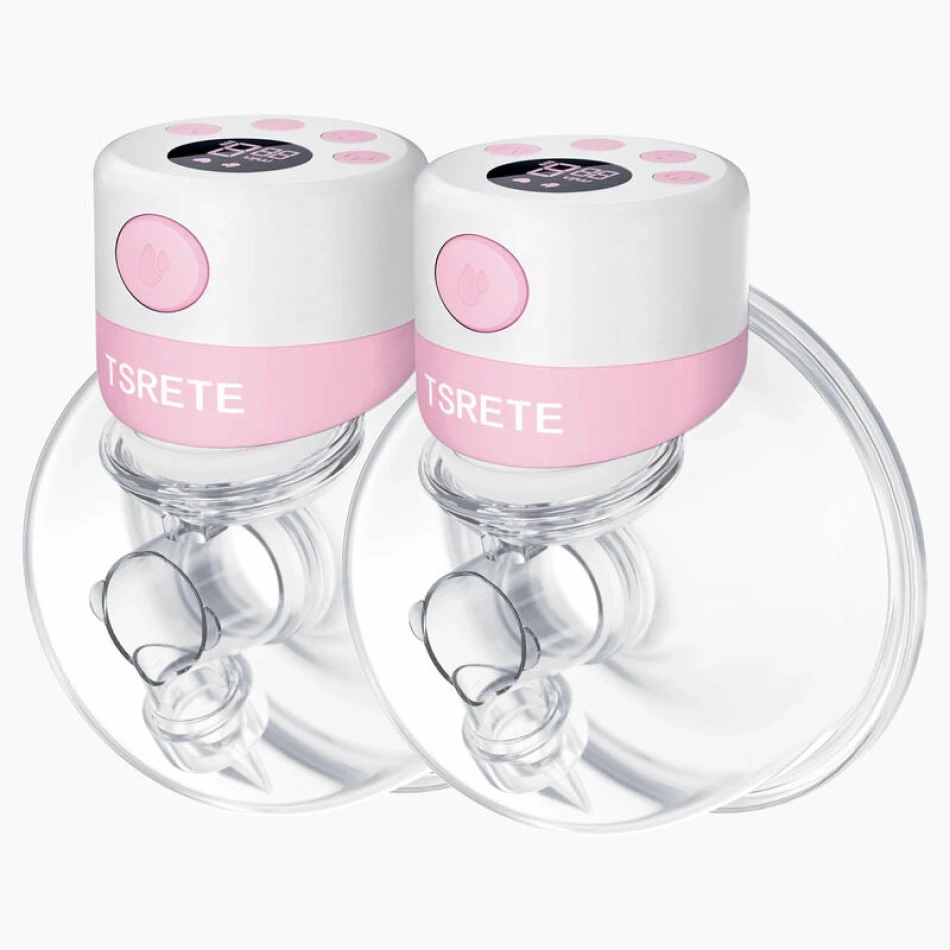
TSRETE S12 Double Wearable Hands-Free Breast Pump
Features:
- Rechargeable, electric, batteries required (Included)
- Holds upto 180mls/6oz on each side
- 40dB of sound
- Weighs 770g/1.7lbs
- Made with 100% food-grade silicone
I chose the TSRETE S12 Double Wearable Hands-Free Breast Pump as the best wearable breast pump overall for a few reasons.
When I first came across it, it looks just like any other wearable pump so I was a little sceptical.
However, when I tried it I found that it was actually quite good quality for money and holds a decent amount of milk.
There were a few things I didn’t like about it but I definitely think the pros outweighed the cons.
What I liked:
- I’ve tried various pumps, but the TSRETE S12 stands out with its larger milk storage capacity, allowing me to pump more without worrying about frequent emptying.
- One of my mommas had an oversupply issue, and this pump was a game-changer for her. Unlike other pumps that stopped when they were full, this one continued to express milk effectively.
- I love the convenience of the display on top of the pump, which shows me the pumping duration and level. It’s a feature that some other pumps lacked, and it helped me keep track of my pumping sessions.
- The suction power is just right, providing a comfortable pumping experience without any pain or discomfort. I found that I didn’t have to pump for extended periods to achieve the same results.
- The clear silicone material of the pump allowed me to see my nipple during pumping, making it easier to position correctly. This was a major advantage over other pumps that made it difficult to get the right placement.
- I experienced zero leakage while bending over or picking up my baby, and emptying the pump into a bottle or storage pouch was a breeze.
- Cleaning the pump was simple, thanks to its well-sized parts. I never had to worry about losing small pieces down the drain.
- The pump’s two modes and nine levels provided flexibility, and the battery life lasted for an impressive amount of time.
- I appreciated that the pump offered three sizes for the nipple fitting, ensuring a comfortable and customized fit.
- If you’re looking for a cheaper option, the TSRETE 12 Breast Pump can also be bought as a single pump which cuts the price by half.
What I disliked:
- While the TSRETE S12 is not the quietest pump on the market, the noise level of around 40 decibels didn’t bother me much.
- Assembling the pump for the first time required a bit of practice, but once I got the hang of it, it became easy and straightforward.
- If you accidentally order the wrong size flange, you’ll need to go through the process of returning it and waiting for the correct size to be sent since only one size is included.
- The design isn’t as sleek fitting as some others I tried so it’s quite noticeable if you wear it in public.
Best budget-friendly wearable breast pump
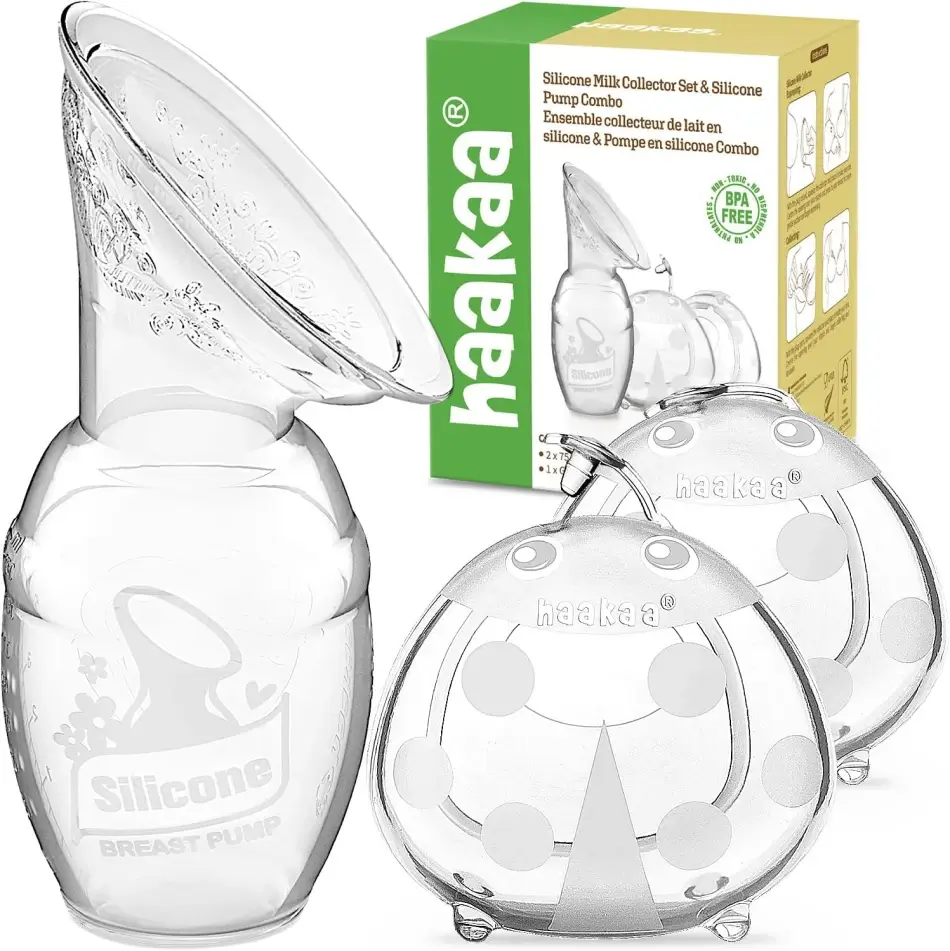
Haakaa Manual Breast Pump and Ladybug Milk Collector Combo
Features:
- Manual/ natural suction breast pump
- The manual breast pump collects 100mls/4oz
- Ladybug milk collector holds 75ml/2.5oz
- Made with 100% food-grade silicone
Now I know what you’re thinking… a natural suction breast pump… does it even work? But hear me out!
This Haakaa Manual Breast Pump and Ladybug Milk Collector combo doesn’t look like much but it does a better job than you’d think.
I found this natural suction breast pump was gentle, easy to use and didn’t make my nipples feel like they’d been in the wringer.
So of course it had to go on the list of the best wearable breast pump for on-the-go mums
For someone on a tight budget or not wanting to waste a drop of their precious milk while breastfeeding, this is a must!
What I liked – Haakaa breast pump:
- The suction works better than I thought it would. It can also be adjusted easily
- It’s super easy to use
- Super easy to wash, no extra parts to assemble or worry about
- Great value for money
- Lightweight and compact
- Doesn’t spill, it stands up easily by itself and also comes with a lid depending on the combo you choose.
- It’s perfect for placing on the other breast while you are breastfeeding
- And for all those mummas out there who are worried about noise, this pump doesn’t make any noise at all
- Can be used to treat mastitis
What I liked – Haakaa ladybug milk collector:
- It’s light and compact
- I loved how you can just put it in your bra and get on with your day.
- It catches all of your milk so its not wasted in the breast pads
- Also super easy and simple to use and clean.
- They’re discrete and can be worn anywhere and everywhere.
- They have a cute design – I had to mention this, who doesn’t love ladybugs?
- Soft on your nipples
- Also has great suction
- Stands up by itself and has a little plug thingy that makes it easy to dispense the milk without spillage
What I disliked – Haakaa breast pump:
- It was easily knocked off by my baby
- It’s a natural suction pump, which means that it can take a bit longer to express than other electric breast pumps.
- It doesn’t fit inside your shirt so you have to walk around with it hanging out
What I disliked – Haakaa ladybug milk collector:
- It doesn’t hold very much so I had to make sure that it didn’t overflow
- It turns yellow after a while because it’s silicone, but this is completely normal and doesn’t really bother me that much.
Best Portable Breast Pump
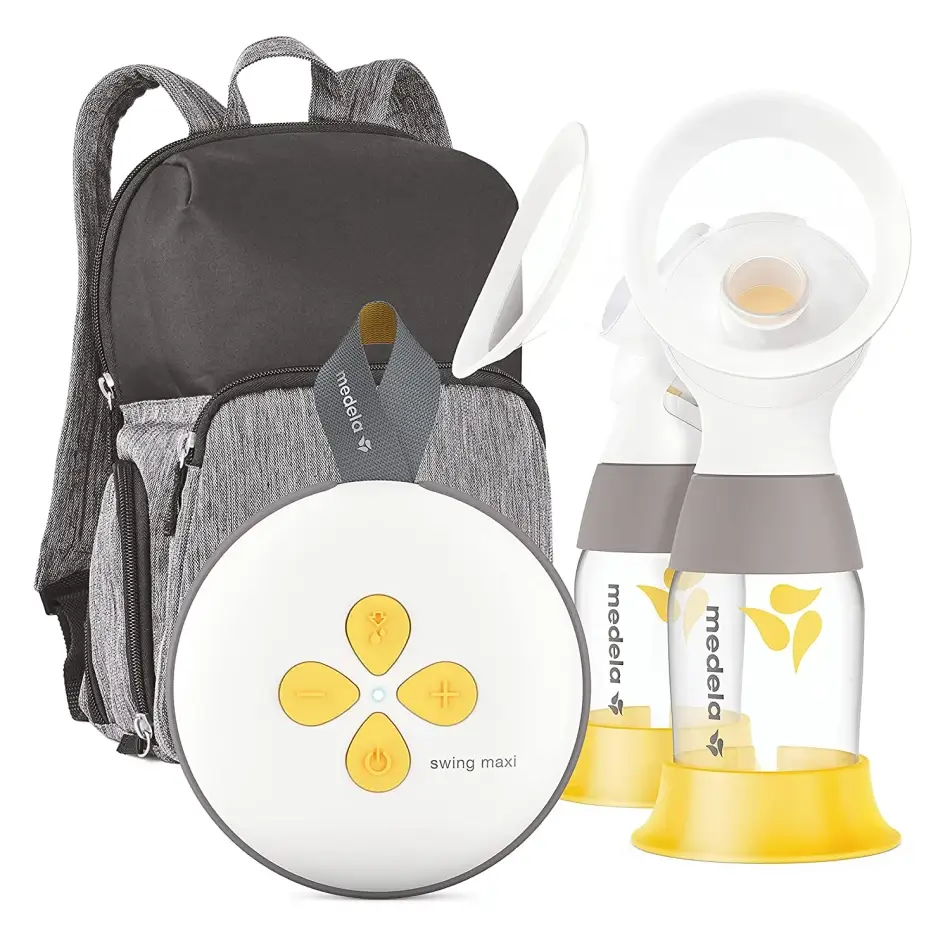
Medela Swing Maxi Double Electric Breast Pump
Features:
- Electric, rechargeable breast pump
- Wieghs 1.48kg/3.28lbs
- Each bottle can hold 150mls
- 45dB of sound
- Has an app
I’m sure you’ve heard of Medela pumps before.
They’re one of the head honchos when it comes to breast pumps and have been around for years.
This is one of their newer pumps and even though it has tubing, it’s still quite light and portable.
The Medela Swing Maxi Double Electric Breast Pump was a must on my list of the best wearable breast pump for on-the-go mums for a few reasons.
The main reason – it was quiet and powerful! I managed to get more milk in less time. That’s a win in my books.
What I Liked:
- First off, the Medela Swing Maxi pump is so light and portable. I could clean and do the things I needed to do around the house while pumping. No more feeling stuck in one spot!
- The silicone cups were soft and comfy.
- It was still surprisingly quiet, only 45 decibels
- The suction power was adjustable like the other pumps but I found this pump got the job done quickly and efficiently, so I could get on with my day.
- The attached bottles were the best part of this pump! Storing the milk was a breeze. Just unscrew the bottles, pop a lid on, and into the fridge. No need to worry about transferring them into a storage bag.
- It comes with a backpack that has a ‘cold compartment’ so I could pump anywhere and not have to worry about getting home to put it in the fridge… within reason.
- Cleaning was a breeze too. No complicated parts to deal with.
- If you need a spare part, it’s easy to buy separate parts online.
What I Disliked:
- Now, it’s not the most compact pump out there. It takes up a bit more space, so keep that in mind if storage is tight.
- I did have to deal with those tubes connecting everything, which added a bit of extra stuff to carry around.
- One downside is that it doesn’t come with a bra for support. You’ll either need to buy one separately or get creative with your hand-holding skills.
- I must admit, it’s not the most discreet pump either. So, if you prefer privacy, you might want to consider other options.
- You can’t just pump one side; you have to do both
Best discrete breast pump
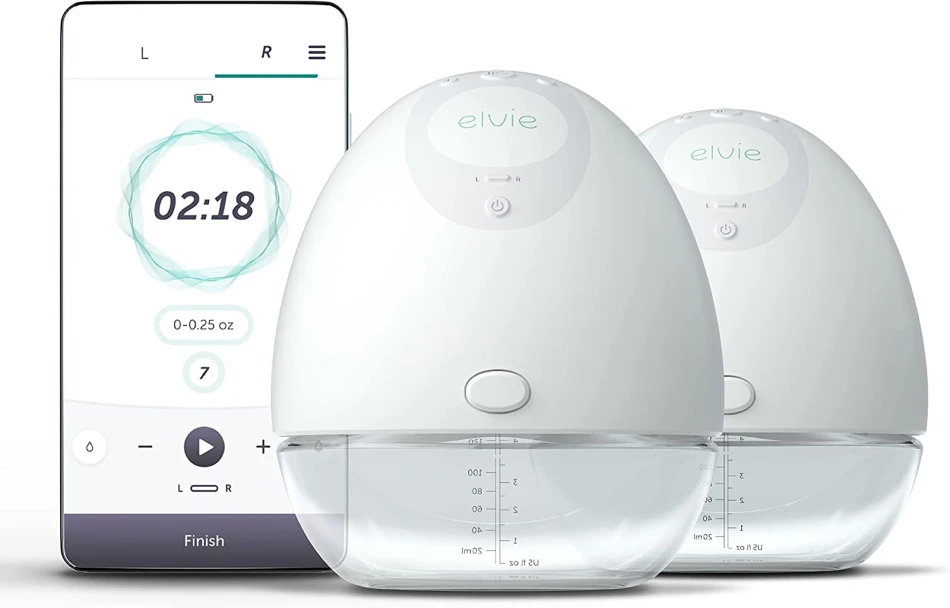
Elvie Breast Pump
Features:
- Electric, lightweight, rechargeable breast pump
- Weighs 225g
- Each pump holds upto 150mls/5oz
- Almost no sound!
One of the most popular breast pumps on the market today – the Elvie Breast Pump.
For my itty bitty titties, it made me look like I actually had some boobs. Not to mention how surprisingly quiet this pump is.
I didn’t realise that a breast pump could look so natural and discrete… I’m so used to seeing these bulky old-fashioned pumps that stick out like a sore thumb.
If it weren’t for its hefty price tag this would be my all-round favourite.
What I liked:
- I loved how I could track and control everything with the app. It was easy to use.
- The Elvie Breast Pump‘s sleek design made it the least noticeable breast pump that I tried… but how visibly unnoticeable can a breast pump really be
- It was very quiet so when I was having meetings or talking on the phone with someone, they couldn’t hear it pumping.
- It actually holds quite a lot of milk – 150mls… it really didn’t look like it would
- It’s by far the lightest breast pump I tried
What I disliked:
- The Elvie Breast Pump isn’t leakproof. If the bottle at the bottom fills up too much it spills over the seal
- It’s hard to see when the bottle is full without taking the pump out of your bra completely
- The pump isn’t very strong, so it can take longer to express your milk
- There are small parts that are hard to clean
- It’s definitely not the most budget-friendly on the list
Best manual breast pump
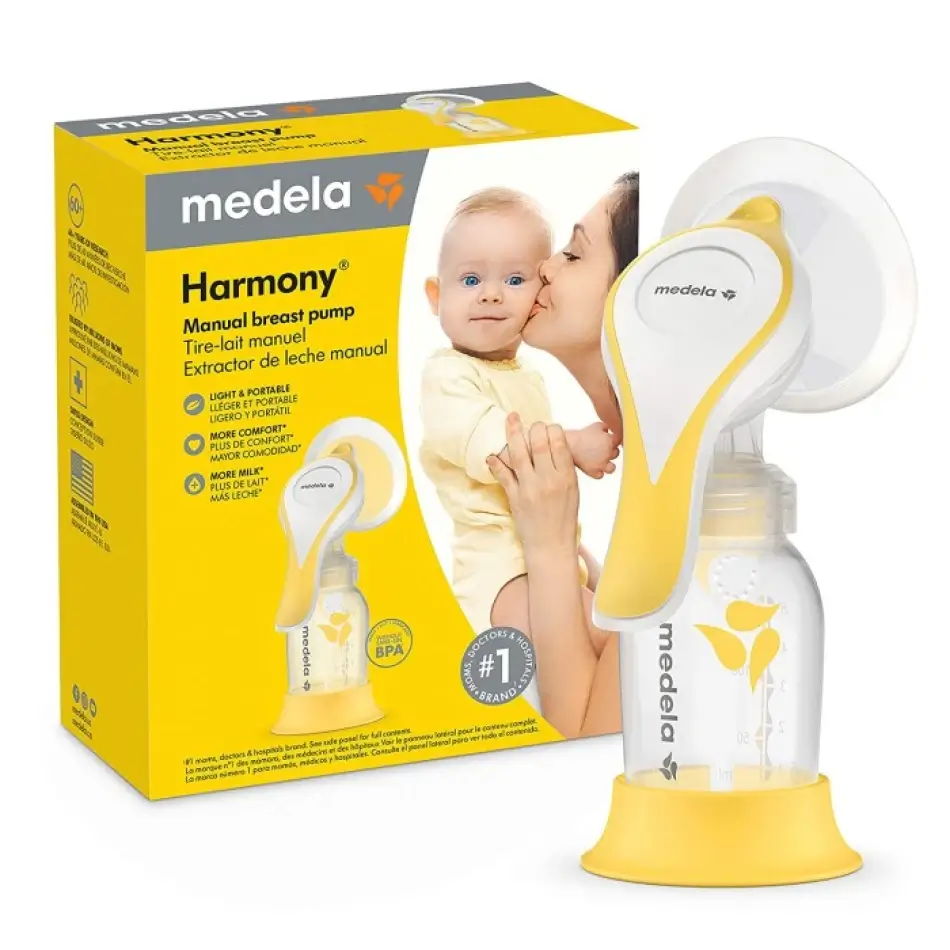
Medela Harmony Manual Breast Pump
Features:
- Manual breast pump
- Silicone flexible breast shield
- Weighs 263g/0.58lbs
- A bottle holds 150mls
Last but certainly not least on our list of the best wearable breast pump for on-the-go mums – the Medela Harmony Manual Breast Pump.
This pump has been on the market for a while and has quite a few competitors but after trying a majority of them, this was my favourite.
For most first-time mummas, the thought of breast pumping is enough to get your head around let alone having to do it manually…. That’s a whole other mission.
Well, it was for me anyway.
But, let me tell you – Once you try it you’ll never want to touch an electric pump again!
What I liked:
- It’s a great addition if you have other Medela products because they all use the same bottles and attachments.
- It also comes with the soft silicone flexi nipple shield, which, as I said before, was soft and fit around my nipple quite well
- This manual breast pump has a 2-phase technology that mimics the suckling of the baby to help increase the letdown of milk. The handle has two ends. The first smaller end is to stimulate letdown, and the second is to express the milk
- The stand stops the bottle from tipping over when you’re done. We all know the feeling of going through all that effort just to have the milk spilt EVERYWHERE.
- Easy to store or feed straight away after pumping
- Only a little bit of sound but nothing as loud as the motors that cone in the electric pumps
- Easy and lightweight to take with you
- The suction is just as good, if not better, than the electric pumps
- There is a nifty trick that makes it super fast to pump. Holding down the long end of the handle during milk letdown to get more milk out rather than the short pumps
What I disliked:
- It’s fiddly to clean, with a few small areas to get into but not a lot of individual parts that you have to clean.
- Manually having to do the work
Let’s get pumping!
There you have it, mums on the go! Our top picks for the 5 best wearable breast pump in 2023.
Whether you’re looking for the best overall performance, a budget-friendly option, portability, discretion, or the simplicity of a manual pump, we’ve got you covered.
From the TSRETE S12 Double Wearable Hands-Free Breast Pump, offering convenience and efficiency, to the Haakaa Manual Breast Pump and Ladybug Milk Collector Combo for those on a budget, each pump brings something unique to the table.
The Medela Swing Maxi Double Electric Breast Pump offers unmatched portability, while the Elvie Breast Pump ensures discreet and silent pumping.
And for those who prefer manual pumps, the Medela Harmony Manual Breast Pump delivers reliable performance.
Whatever your pumping needs may be, these pumps will make your on-the-go journey smoother and more convenient.
So, grab your favourite pump and embrace the freedom and flexibility it brings.
Happy pumping, mummas!
]]>It’s time to add a new trick to your parenting toolbox – baby massage!
Not only is it a great way to bond with your little one, but it also provides numerous benefits, such as improving digestion, reducing stress, and promoting better sleep.
In this ultimate guide to soothing your little one, we’ll cover everything you need to know about baby massage – when to start, how to prepare, and some great techniques to get you started.
So grab some oil, and let’s get to massaging!

What are the benefits of baby massage?
Baby massage isn’t just for your little one’s benefit; it can also be a lifesaver for exhausted moms and dads.
When it comes to promoting relaxation and reducing stress, there’s nothing quite like a soothing baby massage to melt away the day’s stresses.
And let’s not forget about the benefits of a good digestive massage; helping your baby digest their food properly can prevent discomfort and gas, which can lead to some very sleepless nights.
Speaking of sleep, a sleep-inducing massage can help promote healthy sleep patterns and reduce restlessness in both babies and parents.
The best part is that baby massage can be a bonding experience for the whole family and a great way for partners to get involved in the baby’s care.
So, whether you’re looking to ease your little one’s discomfort or just looking for a relaxing way to spend some quality time with your baby, baby massage is a great choice for everyone involved.
When to Start Baby Massage
Before diving headfirst into baby massage, it’s important to make sure your little one is ready.
As a general rule of thumb, it’s best to wait until your baby is at least six weeks old so their delicate skin and little muscles have had a chance to mature a bit.
But as always, it’s never a bad idea to check in with your pediatrician before starting any new baby activities.

What are some techniques for baby massage?
Now that we know the benefits of baby massage let’s dive into the different techniques you can use to soothe your little one.
From relaxing and calming massages to muscle-relaxing massages, there’s a technique for every mood and need.
So, let’s get to it!
- Relaxing and calming massage:
This massage is perfect for promoting relaxation and reducing stress in your little one.
Start by using slow, circular motions to massage outward toward their shoulders.
Move down to their tummy, where you’ll use gentle strokes to massage in a clockwise motion.
Finally, move down to their legs and feet, using gentle kneading and circular motions to promote relaxation and release any tension.
- Sleep-inducing massage:
This technique can help improve sleep and reduce restlessness in babies, which can lead to a more peaceful night’s rest for the whole family.
Start by gently massaging your baby’s head with your fingertips in a circular motion.
Move down to the face, using gentle strokes to massage their cheeks and jawline.
Use gentle strokes to massage their arms and legs, moving in a downward motion toward their feet.
Finally, use your fingertips to massage the soles of their feet in a circular motion.
- Digestive massage:
This massage is perfect for when your little one is feeling a bit backed up or uncomfortable and can help to promote healthy digestion.
Start by using gentle strokes to massage their tummy in a clockwise motion.
You can also try gently bending their knees up toward their chest and holding them there for a few seconds before releasing them.
- Muscle-relaxing massage:
This technique is perfect for easing tension and reducing pain in your little one.
Start by using gentle, circular motions to massage their arms and legs, focusing on any areas where they may be feeling tense or uncomfortable.
- Bonding massage:
This massage is a great way to bond with your baby and can help to promote a strong parent-child connection.
Use gentle, soothing strokes to massage their entire body, focusing on areas where they may be feeling tense or uncomfortable.
Talk or sing to your baby while you massage them to help them feel even more connected to you.
With these five techniques, you’ll be able to soothe your little one like a pro in no time.
So, get ready to bond with your baby and create a relaxing and calming atmosphere that will benefit you both.

How do you prepare for a baby massage?
How to set the mood for a baby massage that would make even the fussiest baby go “ahhh.”
Before diving into your baby’s massage, creating the right environment is a must.
If you have hired a postpartum doula to help you out, they can help you with this step.
Some doulas have special training in baby massage and acupressure, and they might even be able to reccomend some of the best baby massage oils
Think of the vibe you want to set, and make sure the temperature is warm and cozy an there arent any cold drafts disturbing your zen space.
To set the mood, dim the lights and play some soothing tunes, but steer clear of anything too upbeat (your baby isn’t trying to dance, after all).
Lastly, make sure you have everything you need within reach, like massage oil or baby oil, a soft towel or baby mat, and any other supplies you might need.
Get ready to make your baby feel like a pampered prince or princess!
When to avoid baby massage
While baby massage has numerous benefits, there are some situations when you should avoid it.
First and foremost, if your little one is under the weather with a fever, it’s best to give the massage a miss and let them rest and recover.
Similarly, if they have a skin condition or rash, it’s best not to aggravate it with a massage.
If your baby has a medical condition or injury, always consult with your doctor before attempting a massage.
And let’s face it, there are some days when your baby just isn’t in the mood for a massage – and that’s okay too!
Just follow their cues and try again when they’re feeling up to it.
Remember, when it comes to baby massage, it’s all about creating a relaxing environment and helping your little one feel calm and soothed.
Now it’s time to try it out
Well, there you have it – everything you need to know about baby massage!
From the benefits of promoting relaxation and aiding in digestion to the different techniques like relaxing, sleep-inducing, and digestive massages.
Now it’s time to put this knowledge into action and try it out with your little one.
Not only will it provide physical and emotional benefits for your baby, but it’s also a great opportunity for bonding and creating special moments together.
So grab some massage oil, dim the lights, and get ready for some serious relaxation and cuddles with your little one.
Don’t be afraid to try new techniques and see what works best for you and your baby.
With baby massage, the possibilities are endless!
]]>Congratulations on the arrival of your precious little bundle of joy.
While this is undoubtedly an exciting time, the first few weeks after childbirth can be a bit of a rollercoaster ride.
You may find yourself experiencing mood swings, feeling tearful, and having trouble sleeping. Don’t worry, though, you’re not alone — these are all common symptoms of baby blues.
In this article, we’ll provide you with 11 simple steps to help you overcome the baby blues and enjoy a happier postpartum period.
We’ll also take a closer look at the difference between baby blues and postpartum depression, and explain why it’s so important to take care of yourself during this time.
So, let’s get started.
What is Baby Blues?
You’ve just given birth and you’re feeling all the emotions — sad, anxious, and overwhelmed like you’re on an emotional rollercoaster.
Don’t worry, mumma, you’re not alone.
Up to 80% of new mothers experience what’s called the baby blues.
It’s like an emotional hangover that kicks in a few days after birth and can last up to two weeks. Symptoms include crying, feeling overwhelmed, fatigue, and trouble sleeping.
But here’s the good news — it’s totally normal and usually goes away on its own without medical intervention.
This is usually caused by your hormones going wild and the stress of adjusting to life with a newborn.
Just keep an eye on your symptoms and if they don’t improve or are still hanging around after two weeks, reach out to your healthcare provider, as it could be a sign of postpartum depression.
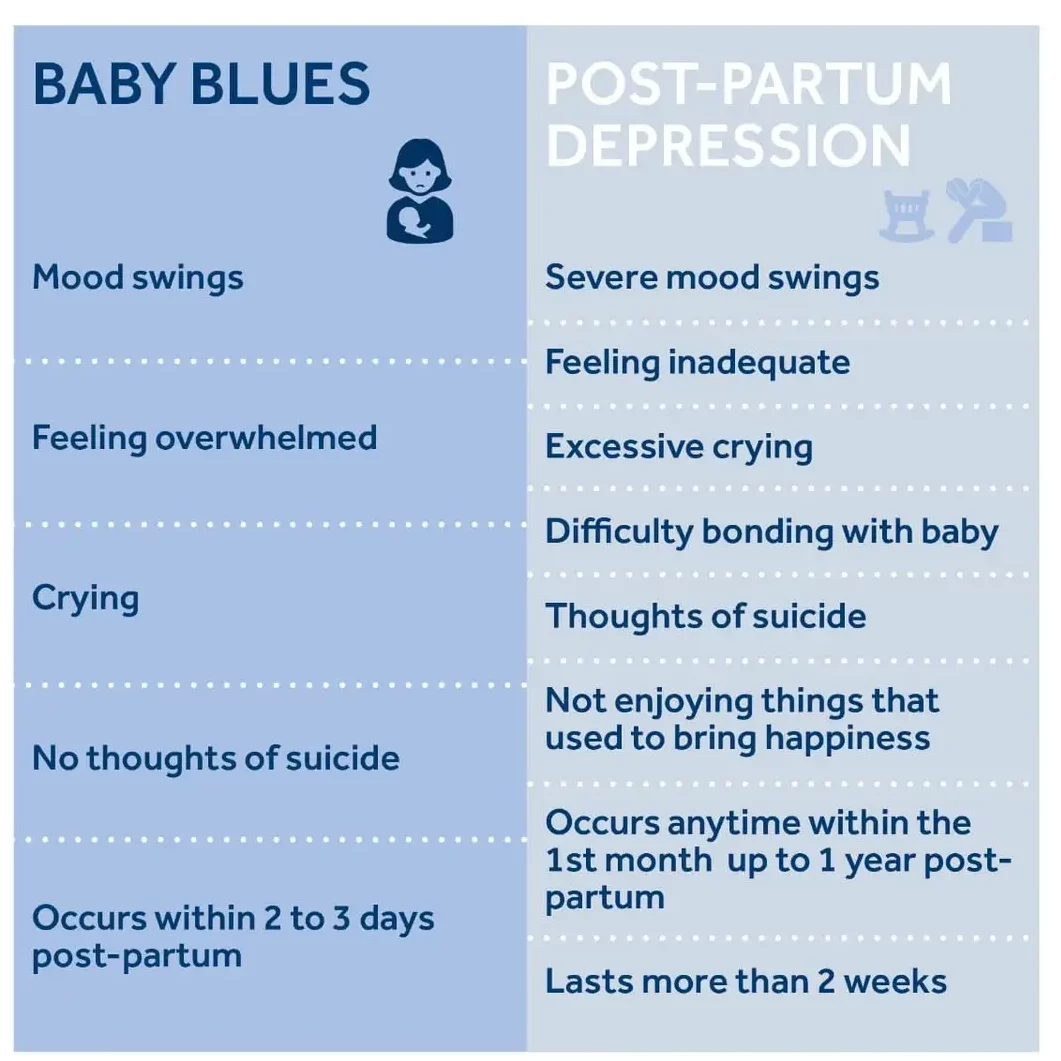
What is the Difference between Baby Blues and Postpartum Depression?
While the baby blues can make you feel like you’re on a bit of an emotional rollercoaster after giving birth, postpartum depression is a more serious condition that affects around 15% of mums, whether it’s their first or fifth baby.
Unlike the baby blues, postpartum depression symptoms can last for several months or even up to a year after giving birth.
But it’s not just mummas that can experience postpartum depression; Studies show that 1 in 10 partners experience postpartum depression, so make sure you’re watching out for each other.
Symptoms of postpartum depression can include feelings of hopelessness, guilt, and worthlessness, as well as a loss of interest in activities you once enjoyed.
Postpartum depression can also make it tough to bond with your baby, and you may experience changes in appetite, sleeping patterns, and energy levels.
It’s super important to recognise the difference between the two and seek help if you’re not feeling like yourself.
It’s quite common for partners to recognise the change and raise concerns because we don’t always realise whats happening.
Both your partner and your healthcare provider can help you create a plan to manage your symptoms and provide appropriate treatment if needed.
Remember, asking for help is a sign of strength.
11 Simple Steps to Overcome the Baby Blues
All those wild hormones can make you feel like you don’t even recognise yourself.
But don’t worry, we’ve got you covered.
We’ve put together a list of 11 simple steps to help you overcome the baby blues and get back to feeling like yourself again.
- Surround yourself with supportive people
Talk to your partner, family, and friends about what you’re going through. Sometimes just having someone to listen to can make a big difference.
There are also many support lines and networks that you can access if you feel like talking to those close to you isn’t enough.
- Take breaks and time for yourself
It’s important to remember that you’re more than just a mum — you’re a person with needs, too.
Try to take some time every day to do something you enjoy, whether it’s reading a book, taking a bath, or just going for a walk.
- Practise self-care
This means taking care of yourself physically, emotionally, and mentally.
Eat nutritious foods, stay hydrated, and try to exercise lightly when you can – talk to your postpartum physiotherapist or doctor to see what you’re able to do in the first couple of weeks.
Take care of your emotional and mental health by practising relaxation techniques like meditation or deep breathing exercises.
- Get enough sleep
This can be tough with a newborn, but try to prioritise getting as much rest as you can.
Take naps when your baby is sleeping, and consider asking for help with night-time feedings.
- Reach out for help if needed
Don’t be afraid to ask for help if you need it.
Whether it’s from your healthcare provider or a friend, there’s no shame in seeking support.
- Consider a support group
Talking to other mums who are going through similar experiences can be incredibly helpful.
Look for local support groups or online communities where you can connect with other new mums.
- Stay active
Exercise can help boost your mood and energy levels.
Increasing your vitamin D levels has been shown to increase serotonin release (the happy hormone), and decrease inflammation and the likelihood of developing postpartum depression.
Even just a short walk outside can make a big difference.
- Keep a journal
Writing down your thoughts and feelings can be a great way to process what you’re going through.
It can also be helpful to look back on later to track your progress.
- Focus on the positive
It can be easy to get caught up in negative thoughts but try to focus on the positive things in your life.
Make a gratitude list every day, and remind yourself of the things you’re grateful for.
- Give yourself time
Remember that adjusting to life with a newborn takes time.
Be patient with yourself, and don’t be too hard on yourself if things don’t go as planned.
You’re doing the best you can, and that’s all that matters.
- Hire a doula
Hiring a virtual doula, or an in-person doula, can provide immense benefits for new mothers experiencing baby blues.
They’re like your best friend who knows everything there is to know about pregancy, birth, labour, caring for a baby, breastfeeding and beyond.
A postpartum doula can offer practical support and advice on baby care, while a nighttime doula can give the mother much-needed rest.
A sibling doula can help older children adjust to the new baby, and a virtual doula can offer emotional support and guidance from a distance.
And thats not even the best part. They can also help you with cleaning, meal preparation and they can provide support to your partner as well.
And if youre feeling like you are falling deeper into a downspiral of emotions, they know exactly what to watch out for and what to do.
They’re there for you when you need them.
With a doula’s help, new mothers can navigate the postpartum period with greater ease and confidence.
FAQs
Baby blues meaning? And are baby blues normal?
“Baby blues” is a term used to describe the mild and temporary mood swings that many new moms experience after giving birth.
It’s completely normal and affects up to 80% of new mothers. You might feel sad, anxious, irritable, or just not like yourself.
Why does the baby blues happen?
The baby blues happen due to a mix of factors, including hormonal changes, exhaustion, and the emotional stress of caring for a new baby.
Hormones like oestrogen, progesterone, and oxytocin can fluctuate wildly during and after pregnancy, which can contribute to these feelings.
When does the baby blues start?
Typically, the baby blues start a few days after giving birth and can last up to two weeks.
Symptoms tend to be the strongest around day four or five after birth and then gradually get better.
Will the baby blues go away?
The good news is that the baby blues will usually go away on their own within two weeks.
But if your symptoms persist or get worse, it’s important to talk to a healthcare professional as it could be a sign of postpartum depression.
Is baby blues the same as postpartum depression?
Postpartum depression is different from baby blues because it’s more severe and lasts longer.
The symptoms are similar but more intense and can include things like feelings of hopelessness, loss of interest in things you used to enjoy, and changes in your appetite or sleep patterns.
It’s important to seek medical attention if you think you might have postpartum depression, as it can be treated with therapy, medication, or a combination of both.
Remember, it’s okay to ask for help and take care of yourself during this time.
What are some help lines that i can call if im experiencing Postpatum Depression symptoms?
Depending on where you are located in the world, there are a range of helplines and support groups that you can contact to seek help.
INTERNATIONAL: Postpartuam support international
AUSTRALIA: PANDA national helpline
UK: Family Action – Family line
USA: National Maternal Mental Health Hotline
Don’t Let the Baby Blues Bring You Down
We know adjusting to life with your new little one can be challenging, and it’s totally normal to experience the baby blues.
Remember, though, that these blues are just a temporary phase that’ll pass.
It’s crucial to recognise the difference between baby blues and postpartum depression, and to reach out for help if needed.
And don’t forget to prioritise self-care during this time, whether it’s taking time for yourself, staying active, or considering hiring a doula.
Just remember that you’re not alone, and seeking support is a sign of strength.
With the right tools and help, you can get through the baby blues and enjoy this special time with your new family.
]]>