One minute you’re fine, and the next, you’re wondering, why are my boobs sore and feeling like they’ve been through a boxing match?
Is it a new medication you’re taking? Hormones? Or something more serious?
The truth is, there are many reasons your breasts might be sore, and some of them might surprise you.
In this article, we’ll break down seven unexpected causes of breast pain and when it’s time to consult a doctor.
Plus, we’ll throw in some tips for relief because no one likes to be uncomfortable.
Let’s get into it.
What does “sore” even mean when it comes to boobs?
Before we jump into why are my boobs sore, let’s get clear on what “sore” actually means in this context.
Breast soreness, medically called mastalgia, comes in several forms.
It can feel like a dull, heavy ache, a sharp and sudden pain, or even a burning sensation.
This pain can vary from mild discomfort to a more persistent ache that disrupts daily activities.
You might feel it only when you touch or press on your breasts, or it could hang around, even when you’re sitting still.
Knowing what type of pain you have is helpful for narrowing down the cause. Broadly speaking, there are two main types of breast pain:
Cyclical Pain:
This pain is tied to your menstrual cycle.
For most people, it appears in the days before their period and usually affects both breasts, with tenderness in the upper and outer areas.
Cyclical pain is often caused by fluctuating levels of estrogen and progesterone, which can lead to temporary swelling and tenderness.
Once your period starts, the pain usually subsides.
Non-Cyclical Pain:
This pain doesn’t follow a monthly pattern and isn’t linked to your menstrual cycle.
Non-cyclical pain may come and go at random and can affect only one breast or a specific area.
It can be triggered by an injury, infection, or even certain medications.
This type of pain is less common but may last longer and feel more intense.

Reason #1 — Hormonal changes are playing games with your boobs
Hormones are the most common reason behind breast soreness.
Estrogen and progesterone, the primary female hormones, are constantly fluctuating.
These changes can have a direct impact on your breast tissue, leading to tenderness, swelling, and pain.
PMS (Premenstrual Syndrome):
Before your period, estrogen and progesterone levels shift, preparing your body for a potential pregnancy.
These changes cause your breast ducts and glands to expand, often making your breasts feel swollen, tender, or heavy.
This soreness typically eases once your period starts, as hormone levels drop.
Pregnancy:
In early pregnancy, hormone levels like estrogen and progesterone skyrocket, leading to changes in breast tissue.
This hormonal surge can make breasts feel sore and tender, often noticeable before other pregnancy symptoms appear.
Menopause:
As you approach menopause, hormone levels begin to fluctuate unpredictably, and breast tenderness can become a new symptom, even if you haven’t experienced it before.
The hormonal rollercoaster of perimenopause can bring about episodes of breast soreness that may linger as estrogen levels decline.
Note:
If your breast pain is severe, doesn’t go away after your period, or comes with other symptoms like nipple discharge or lumps, it’s best to check in with your doctor.
Persistent pain, especially if it doesn’t match the pattern of cyclical soreness, may need further investigation.
Reason #2 — You might be pregnant (even if you don’t know it yet)
Pregnancy can make your boobs sore earlier than you’d think.
For a lot of people, sore breasts are one of the first signs.
Sometimes even before a missed period when you’re wondering, Why are my boobs sore?
Pregnancy might be the answer.
Early Pregnancy Hormones:
Right after conception, hormones like hCG and progesterone go up fast, which kick-starts changes in your breast tissue.
That’s why you might feel soreness, swelling, and extra sensitivity early on.
Areola Changes:
You might also see some changes around your nipples.
If your areolas start looking darker or bigger, that’s just your body getting ready for breastfeeding, all thanks to those pregnancy hormones.
Note:
If you think you might be pregnant but haven’t taken a test yet, now’s a good time.
And if the soreness is intense or comes with things like nipple discharge, give your doctor a call to rule out anything else.

Reason #3 — Your bra is doing you dirty
A badly fitting bra can be a sneaky source of breast soreness.
If you’re feeling sore by the end of the day, check your bra—it might be the culprit.
Wearing the wrong size is more common than you think.
Straps Digging In:
Tight straps aren’t doing you any favours.
If they’re cutting into your shoulders, they’re putting too much pressure on your chest, which can definitely lead to soreness.
Underwire Drama:
If you’ve got underwire jabbing into you, you know it can be the worst.
Underwire that pokes or presses into the wrong spot can lead to pain and even a bit of skin irritation.
Not Enough Support:
If your bra’s too loose, gravity takes over, and all that movement during the day makes for some sore breasts by nighttime.
A bra should hold everything steady to keep you comfortable.
Tip:
If it’s been a while since you were fitted, it might be time for a check-in with a pro.
Bodies change, and so do bra sizes.
A proper fit can make all the difference when it comes to comfort and avoiding that end-of-day soreness.
Reason #4 — You’re working out (and your boobs aren’t happy about it)
Exercise is fantastic for your body, but let’s be real—your boobs might not agree, especially if they’re not getting the support they need.
Without a good sports bra, workouts can leave you with sore, unhappy breasts.
Runners:
Running, jumping, and other high-impact activities put a lot of stress on your breast tissue.
Every bounce causes movement that stretches and pulls the ligaments in your breasts.
Without the right sports bra to reduce that movement, you’re likely to end up with soreness that sticks around post-workout.
Chest Exercises:
If you’re hitting the weights and doing chest presses, push-ups, or bench presses, you might notice soreness around your breasts.
While this is mostly muscle soreness from working out your pecs (the muscles under your breast tissue), it can still feel like breast pain.
This soreness is usually from microscopic tears in the muscle that occur as part of strength training, which then heal to build strength.
Tip:
Always wear a supportive, well-fitted sports bra when you’re working out, especially for high-impact activities.
Look for sports bras designed for your cup size and activity level; they’re worth the investment.
If your pecs are sore from strength training, give yourself a day or two of rest, and try light stretching to help with recovery.
Reason #5 — Medications you’re taking might be to blame
Sometimes, breast soreness sneaks in as a side effect of medications.
If you’ve started a new medication recently, this could be the culprit.
Birth Control:
Hormonal contraceptives like the pill, the patch, or certain IUDs contain estrogen and progesterone, which can lead to breast tenderness.
These hormones affect breast tissue as they work to prevent pregnancy, and some people experience more soreness than others.
Antidepressants:
Certain antidepressants, especially SSRIs (selective serotonin reuptake inhibitors), have been known to cause breast pain as a side effect.
The exact reason isn’t fully understood, but it’s thought that changes in serotonin can also impact other hormone levels, causing unexpected breast tenderness.
Hormone Therapy:
If you’re on hormone replacement therapy for menopause symptoms, breast soreness is a common side effect.
The additional hormones in HRT can mimic the hormonal fluctuations of your cycle, leading to sore breasts similar to what you might feel before a period.
Note:
If you suspect your medication is causing breast pain, reach out to your doctor.
They might adjust your dose, suggest an alternative, or offer other ways to manage the soreness.
Never stop taking medication without talking to your doctor first; they’ll help find the best option for you.

Reason #6 — Caffeine might be messing with your boobs
If you’re hooked on coffee, tea, or energy drinks, this one’s going to sting a bit: caffeine could be part of your breast soreness problem.
Caffeine may contribute to breast tenderness, especially if you have fibrocystic breasts.
Caffeine’s Role:
Some studies suggest that caffeine can worsen breast pain, particularly for people with fibrocystic breasts—a condition where you develop non-cancerous lumps in your breast tissue.
Though researchers aren’t entirely sure why, it’s thought that caffeine may increase breast sensitivity by affecting hormone levels or blood flow.
If you’re dealing with recurring breast soreness, try reducing caffeine for a couple of weeks and see if you notice a difference.
This means cutting back on coffee, sodas, energy drinks, and even chocolate.
If you start feeling better, you might want to stick to decaf, at least part of the time.
Sorry, coffee fans!
Reason #7 — You could have a cyst or infection
Sometimes breast soreness has more going on beneath the surface, like a cyst or an infection.
Both can cause tenderness and other symptoms, so they’re worth watching out for.
Fibrocystic Breasts:
People with fibrocystic breasts develop lumps or cysts, which are benign (non-cancerous) but can be tender and sore, especially before your period.
These lumps can make your breasts feel dense or ropey, and it’s a fairly common condition.
Mastitis:
If you’re breastfeeding, mastitis—a painful breast infection—is a possibility.
It can cause soreness, redness, swelling, and sometimes fever.
Mastitis usually happens when a milk duct gets blocked or bacteria enters through a crack in the skin, leading to infection.
It’s uncomfortable but treatable with antibiotics.
Note:
If you find a new lump, have redness, unusual nipple discharge, or if the pain is severe, see your doctor.
They might suggest an ultrasound or a mammogram to rule out other issues and to confirm if it’s a cyst or something else.
When Should You Be Worried About Sore Boobs?
Most of the time, breast soreness is no big deal and goes away on its own.
But if you’re frequently asking, why are my boobs sore?, sometimes it can signal something more serious.
Here are some red flags that mean it’s time to see your doctor:
Pain That Doesn’t Go Away:
If you’ve had consistent pain for more than a couple of weeks, it’s worth getting checked.
Persistent soreness, especially if it doesn’t match up with your usual cycle, needs a second look.
A New Lump:
Any new lump should be evaluated by a healthcare professional, even if it feels small.
Most lumps aren’t cancer, but it’s best to make sure.
Nipple Discharge:
If you notice any discharge, especially if it’s bloody or clear (not milky or cloudy), let your doctor know.
Discharge outside of breastfeeding can sometimes be linked to underlying issues.
Skin Changes:
Dimpling, redness, or thickened skin on your breast can sometimes point to a more serious condition, like breast cancer.
Keep an eye out for these changes, and if anything looks off, schedule an appointment.
If any of these symptoms are familiar, don’t hesitate to reach out to a healthcare provider.
When it comes to your health, it’s always better to be cautious.
Tips for Soothing Sore Boobs at Home
Dealing with sore breasts can be uncomfortable, but a few simple steps at home can help take the edge off:
Warm Compresses:
A warm cloth or heating pad can relax the area and reduce pain.
It’s especially helpful for muscle soreness around the breasts.
Cold Compresses:
If there’s swelling, try a cold pack to reduce inflammation.
Just wrap it in a cloth first to protect your skin, and don’t apply it for too long.
Over-the-Counter Pain Relief:
Ibuprofen or acetaminophen (a.k.a. paracetamol) can help with pain if the soreness is too much to ignore.
Supportive Bras:
Make sure you’re wearing the right bra for what you’re doing, especially during workouts.
For high-impact activities, a good sports bra can make all the difference.
Diet Tweaks:
Cutting back on caffeine and salty foods might help with soreness, especially if your breasts are sensitive to water retention.
Try it for a couple of weeks to see if you notice a change.
These small adjustments can make a big difference in managing breast soreness.
If the pain sticks around or gets worse, it doesn’t hurt to check in with your doctor.
]]>If you’re reading this, chances are you or someone close to you is preparing for or recovering from a vaginal birth.
First off, congratulations on the new addition to your family!
Vaginal birth, also known as natural birth, is when a baby is born through the birth canal.
It’s a miraculous process, but it can also be a bit daunting, especially when it comes to recovery.
Knowing what to expect can ease a lot of worries and help you prepare better.
Recovery after vaginal birth involves several aspects, the most commonly asked about are bleeding, when it’s safe to have sex, taking a bath, and the overall healing process.
This guide will answer some common questions I always get asked:
- How long do you bleed after vaginal birth?
- When can you have sex after vaginal birth?
- When can you take a bath after vaginal birth?
- How long does it take to recover from vaginal birth?
We’ll also touch on related topics like vaginal stitches after birth, the benefits of watching vaginal birth videos, and vaginal birth vs C-section.
Let’s dive in and get you the information you need to navigate this beautiful, yet challenging time.

What to Expect After Vaginal Birth
The immediate postpartum period is a mix of joy, relief, and physical exhaustion.
After the baby arrives, your body starts the recovery process right away.
It’s a time of significant change, and knowing what to expect can help you manage it better.
Most women experience bleeding, also known as lochia, which can last several weeks.
You’ll likely have contractions as your uterus shrinks back to its pre-pregnancy size.
These contractions, sometimes called afterpains, can be uncomfortable but are a normal part of the healing process.
Initial recovery also includes managing any vaginal stitches after birth if you had a tear or episiotomy.
The first few days and weeks are important for healing, so taking it easy and practising good self-care is essential.
Patience is key during this time, as your body has been through a lot and needs time to recover fully.
How Long Do You Bleed After Vaginal Birth?
Bleeding after childbirth, known as lochia, is your body’s way of getting rid of the extra blood and tissue it no longer needs. Lochia typically goes through three stages:
- Lochia rubra: The first stage, lasting about 3-5 days, involves heavy bleeding with bright red blood.
- Lochia serosa: The second stage, lasting about 2-3 weeks, sees the blood turning pinkish or brownish.
- Lochia alba: The final stage, lasting a couple more weeks, involves a yellowish or whitish discharge.
The overall duration of bleeding varies but generally lasts about 4-6 weeks.
It’s normal for the flow to be heavier in the beginning and gradually lighten over time.
If you notice any large clots or have concerns about the amount of bleeding, it’s important to contact your doctor or midwife.
Bleeding can be managed by using maternity pads, resting as much as possible, and avoiding strenuous activities.
Stay hydrated and eat nutritious foods to support your body’s healing process.
Remember, patience and self-care are key during this time.
Contractions, known as afterpains, can also occur as your uterus contracts back to its normal size, especially if you’re breastfeeding.
When Can You Have Sex After Vaginal Birth?
After giving birth, many new parents wonder when they can resume sexual activity.
The general guideline is to wait about six weeks before having sex again.
This period allows your body to heal and reduces the risk of infection.
However, every person is different, and it’s important to listen to your body and talk to your healthcare provider or doula if you’re worried or unsure.
Here’s what to consider:
- Physical Readiness: Your body needs time to recover from childbirth. Vaginal tissues need to heal, and if you had stitches, they need to dissolve and the area needs to heal properly.
- Emotional Readiness: It’s not just about physical healing. Emotional readiness is equally important. The postpartum period is a time of significant adjustment, and it’s important that you feel comfortable and ready for intimacy.
- Communication with Your Partner: Open communication with your partner about any fears or discomfort is a huge step when thinking about being intimate after having a baby. It’s normal to feel apprehensive, and discussing these feelings can help both of you adjust.
- Pain and Discomfort: If you experience pain or discomfort during sex, stop and talk to your partner. Talking to your doula or your healthcare provider can also help as they can offer advice or treatments to help ease any issues.
- Contraception: Discuss contraception with your doctor. You can become pregnant even before your first postpartum period, so it’s important to consider your options. Make sure to talk to your doctor about hormonal methods such as vaginal ring birth control to make sure it’s safe.
Remember, there’s no rush.
Taking the time you need to feel ready both physically and emotionally will make the experience more comfortable and enjoyable.
Understanding how your body feels during labor and what contractions feel like can help you better understand your postpartum body.
When Can You Take a Bath After Vaginal Birth?
Taking a bath can be a relaxing way to soothe your body after childbirth.
However, it’s generally advised to wait a few days before taking a full bath.
This waiting period helps reduce the risk of infection as your body heals.
Here’s what you need to know:
- General Advice: Most doctors recommend waiting at least a few days before taking a bath. This allows any tears or stitches to start healing and reduces the risk of bacteria entering the birth canal.
- Risk of Infection: The primary concern with taking a bath too soon is the risk of infection. After giving birth, your body is more vulnerable, and it’s essential to keep the vaginal area as clean as possible.
- Alternatives to Full Baths: In the first couple of days, consider alternatives like sponge baths or sitz baths. A sitz bath involves sitting in a shallow bath of warm water, which can help clean and soothe the perineal area without the risk of a full bath.
- Consult Your doctor, midwife or doula: They can give you personalized recommendations based on your specific situation.
Patience is key during this time.
Giving your body the time it needs to heal will help you avoid complications and ensure a smoother recovery.

Recovery Time After Vaginal Birth
Recovery after vaginal birth is a journey that varies for each person.
Here’s a general timeline to help you understand what to expect:
- First Few Days: Intense but manageable. You’ll experience bleeding, contractions, and possibly discomfort from vaginal stitches.
- First Few Weeks: Bleeding decreases, stitches start to heal, and energy levels begin to improve.
- First Few Months: Most physical healing occurs, and you gradually return to normal activities.
Several factors can affect recovery time, including the degree of tearing, the presence of prolapse, or Diastasis recti (abdominal muscle separation).
How Long Does It Take to Recover from Vaginal Birth?
The recovery process typically spans several weeks to months. Here’s a detailed overview:
- Initial Recovery (0-2 Weeks):
- Healing of Stitches: If you had an episiotomy or tearing, stitches should start to heal within the first two weeks. Keep the area clean and dry to prevent infection.
- Lochia: Expect bleeding similar to a heavy period, tapering off over the first week.
- Pain and Discomfort: Manageable with or without pain relief and proper rest. Avoid heavy lifting and strenuous activities.
- Mid Recovery (2-6 Weeks):
- Reduction in Bleeding: Lochia changes from red to pinkish-brown and becomes lighter.
- Stitches Fully Heal: Most stitches dissolve or are removed by your healthcare provider.
- Gradual Return to Activity: Begin light activities and gentle exercise as recommended by your doctor or physio. Kegel exercises can help strengthen the pelvic floor.
- Full Recovery (6 Weeks to 6 Months):
- Physical Healing: Most women feel significantly better by six weeks, though complete healing may take several months, especially if you experience severe tearing or a prolapse.
- Diastasis Recti: If you have abdominal separation, exercises specifically designed for this condition can help. Consult a physiotherapist if needed.
- Returning to Normal Activities: Gradually resume normal physical activities, including sex, as you feel comfortable. Always consult your doctor, midwife or doula provider if you’re unsure.
- Emotional Recovery: Postpartum depression affects many new mothers and fathers. Seek support from friends, family, or professionals if you experience persistent sadness or anxiety.
Recovery is not just about the physical aspect; emotional recovery is equally important.
Postpartum depression can impact your overall well-being, so it’s vital to recognize the signs and seek help if needed.
Prioritize rest, good nutrition, and gentle exercise to support your body’s healing.
Foods rich in protein, iron, and fiber can aid recovery and boost energy levels.
Stay hydrated and maintain a balanced diet to support your healing process.
Taking care of yourself is crucial.
Your body has gone through significant changes, and giving it time to heal will ensure you can care for your newborn effectively.

Vaginal Birth vs C-Section
Childbirth can happen in two main ways: vaginal birth and Cesarean section (C-section).
Understanding the differences between these two methods can help expectant parents make informed decisions about their birthing plan.
What is a C-Section?
A C-section is a surgical procedure where a baby is delivered through an incision in the mother’s abdomen and uterus.
This procedure is typically performed when vaginal delivery would put the baby or mother at risk.
According to the World Health Organization, C-sections are only necessary in about 10-15% of births to prevent health complications.
Recovery Times and Experiences
Vaginal Birth:
- Recovery Time: Generally, 6 weeks for initial recovery, with full recovery taking up to a few months.
- Experience: Involves natural labor pain, possible tearing, and postpartum bleeding. Recovery includes managing stitches, if any, and dealing with lochia.
C-Section:
- Recovery Time: Typically, 6-8 weeks for initial recovery, but full recovery can take several months. The incision site needs significant time to heal.
- Experience: Involves surgical pain, limited mobility post-surgery, and longer hospital stays. Requires managing the surgical wound and avoiding strenuous activities for an extended period.
Pros and Cons
- Vaginal Birth:
- Pros: Shorter hospital stay, lower risk of infection, quicker physical recovery, less risk of respiratory issues for the baby, beneficial bacteria exposure for the baby and immediate skin-to-skin contact with the baby.
- Cons: Possible perineal tearing, painful contractions during labour, possable urinary incontinence, pelvic floor issues, and pelvic organ prolapse.
- C-Section:
- Pros: Can be planned and scheduled, avoids labour pain, reduces the risk of trauma to the baby during delivery, and can be life-saving in emergencies.
- Cons: Major surgery with a longer recovery period, increased risk of infection and risk of complications in future pregnancies, potential for surgical complications and delayed physical bonding with the baby which could lead to breastfeeding difficulties.
Understanding the differences between vaginal birth and C-section is key for making an informed decision.
Each method has its own set of advantages and challenges, and the best choice depends on individual circumstances and medical advice.

Practical Tips and Resources
Navigating the postpartum period can be overwhelming.
Here are some practical tips and resources to help you through this time:
Hydration and Nutrition
- Stay Hydrated: Drinking plenty of water is important for a fast recovery, especially if you are breastfeeding. Aim for at least 8-10 glasses of water a day.
- Balanced Diet: Eat a variety of nutrient-dense foods to support healing. Focus on protein-rich foods, fruits, vegetables, and whole grains. Iron-rich foods like spinach and lean meats can help replenish blood loss.
Pelvic Floor Exercises
- Kegel Exercises: Strengthen your pelvic floor muscles by doing Kegel exercises daily. This can help with urinary incontinence and promote faster healing.
- Gentle Exercise: Start with light activities such as walking. Gradually increase intensity as your body heals and only after getting the green light from your midwife or physio.
Seeking Support
- Family and Friends: Don’t hesitate to ask for help. Whether it’s cooking meals, cleaning, or watching the baby, accepting help can make a big difference.
- Professional Support: Consider hiring a doula for postpartum support. Doulas can offer guidance, emotional support, and practical help during the early weeks.
Watching Vaginal Birth Videos and listening to positive birth stories
- Preparation: Seeing what happens during a vaginal birth can help you feel more prepared and reduce fear of the unknown.
- Reducing Anxiety: Positive birth stories and videos can ease anxiety and build confidence. Knowing what to expect can make the experience less intimidating.
- Real Experiences: Learning from the experiences of other women can provide comfort and practical tips. It’s reassuring to see others go through the same process and come out fine.
Where to look
- YouTube Channels: Look for real and raw birthing videos, you can watch both hospital and home births. Remember to keep an open mind. A few that i love are Bridget Teyler’s positive home birth and Charlotte and Mitchell’s unmedicated hospital birth
- Podcasts: The Worldwide Doula Podcast offers great insights and stories from around the globe. You can listen to it on Spotify.
Watching birth videos and listening to positive birth stories can be a powerful tool in preparing for your own birthing experience.
Choose sources that focus on positive, realistic portrayals of childbirth to build your confidence and knowledge.
Final Thoughts on Vaginal Birth Recovery
Recovering from a vaginal birth is a unique journey for every mother.
We’ve covered the essentials: bleeding duration, resuming sex, bathing, and overall recovery time.
Remember to stay hydrated, eat a balanced diet, and do gentle exercises to aid your recovery.
Watching birth videos and listening to positive stories can also help ease your mind.
Be patient and kind to yourself as your body heals. Always consult your midwife, doula, or doctor for personalized advice and support.
Take one day at a time, and celebrate the small victories along the way.
Your physical and emotional well-being is important for both you and your baby.
]]>“Ah, here we go again.”
“That time of the month.”
“Time to get into my sweats and break out the chocolate.”
Not to mention the number of times you hear, “It must be ‘that’ time of the month,” because you’re a little short-tempered.
These comments give menstruation a bad rep and make you feel embarrassed and gross because you’re on your period.
Many of us go through our monthly cycle without really understanding what’s happening behind the scenes.
It’s not until something’s wrong and we need to know about our cycles that we delve into research.
Understanding your menstrual cycle phases isn’t just about tracking when your next period might be due; it’s about getting insights into your health.
Knowledge isn’t just power—it’s empowering.
By embracing and understanding the changes your body goes through, you can make more informed decisions about your health and lifestyle.
And learn to love your body and menstrual cycle.
What is a Menstrual Cycle and Why Do We Have One?
The first moments of womanhood can be scary and quite surreal.
I remember the day that I got my period, my first thought, was “Oh sh*t, I’m fertile”
But I’m sure this is not a normal reaction for a 13-year old girl.
I’d think most girls would sit there staring at the toilet paper, having an internal freak-out for at least a couple of minutes.
So, what exactly is the menstrual cycle, and why is it such a fundamental part of female biology?
Let’s break it down:
What’s a menstrual cycle?
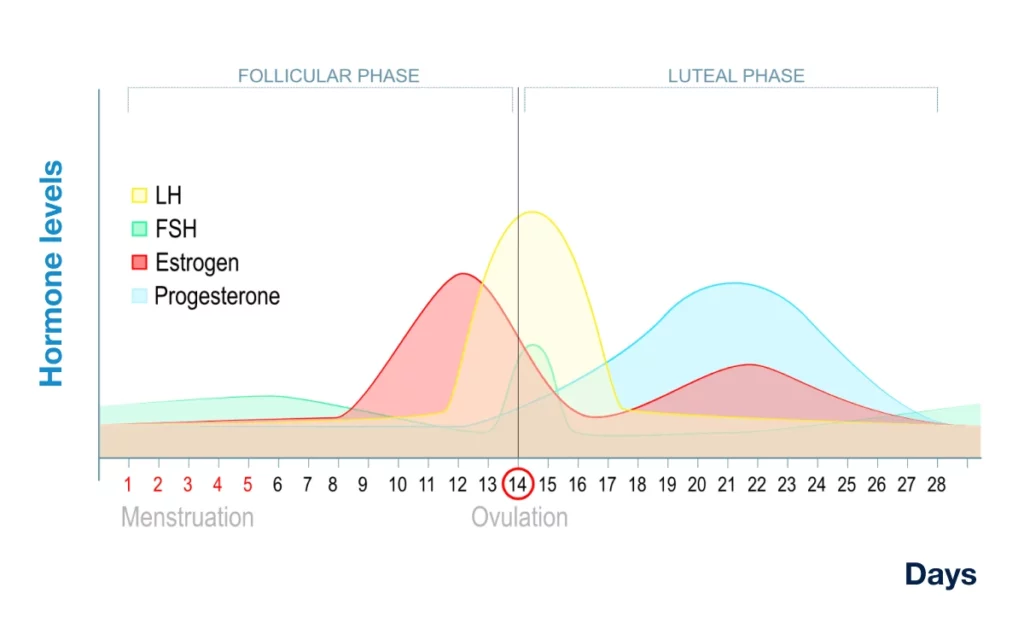
The menstrual cycle is the series of changes your body goes through monthly in preparation for the possibility of pregnancy.
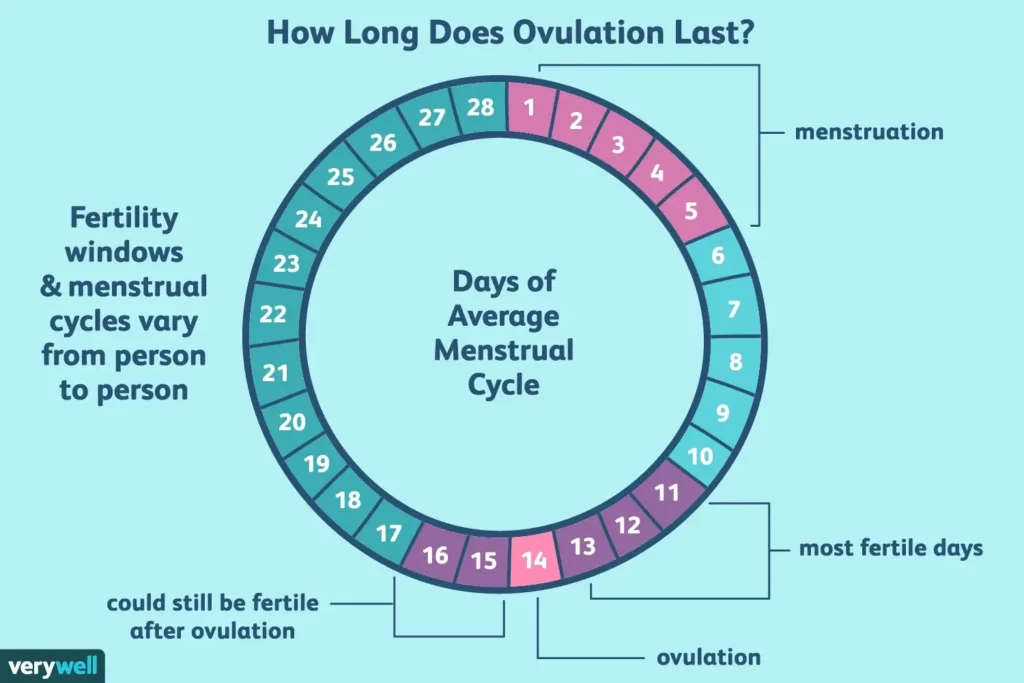
A normal cycle is 28 days long on average.
Each month, your body prepares an egg that, if fertilised, could develop into a pregnancy.
And if the egg isn’t fertilised?
The lining of your uterus sheds, and voila — you have a period.
Which hormones are involved?
It’s all controlled by hormones.
Oestrogen and progesterone are the main players here.
There’s also luteinizing hormone (LH) and follicle-stimulating hormone (FSH).
These all rise and fall at different phases throughout your cycle, coordinating the timing of the egg release and the preparation of the uterus for potential pregnancy.
How does this impact my emotional well-being?
These hormonal fluctuations can affect more than just your reproductive health.
They can influence your mental health, metabolism, and even how you handle stress.
It’s all interconnected.
Our bodies are amazing… and complicated.
The 4 Menstrual Cycle Phases
Knowing about the menstrual cycle in detail helps you understand many of the symptoms and feelings you experience throughout the month.
Let’s delve into each phase, focusing on what happens and how you can manage and embrace these changes.
Menstrual Phase
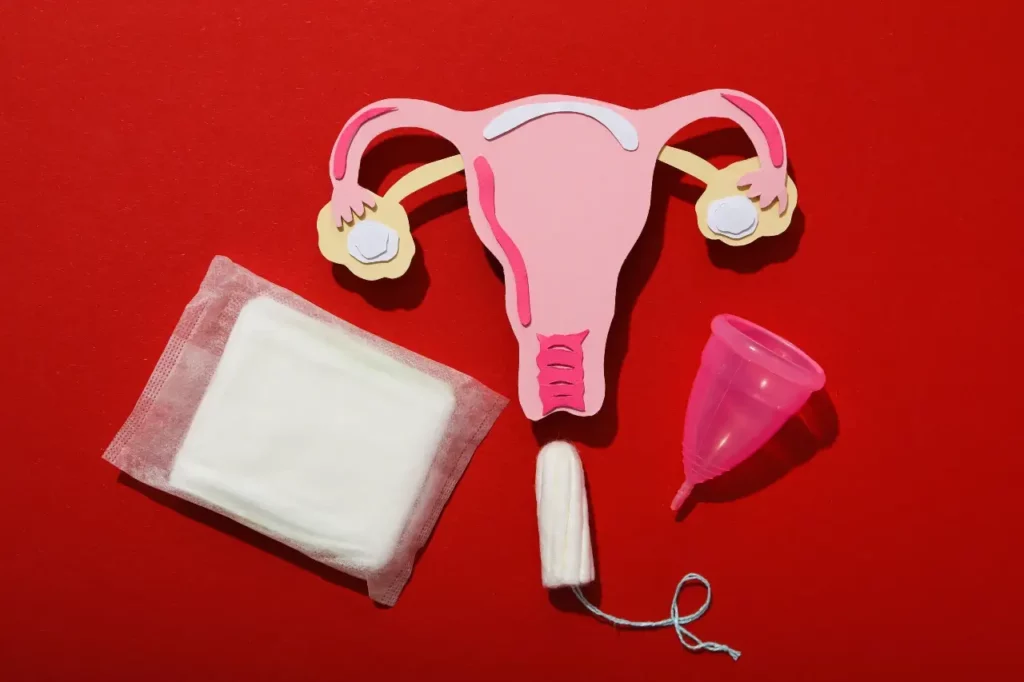
Contrary to common belief, your menstrual cycle actually begins on the first day of your period.
I don’t know about you, but I always thought that my period signalled the end of my cycle.
During this phase, if there is no fertilised egg, the thickened lining of the uterus breaks down and is shed through the vagina.
Typically from day 1 to day 5.
What’s happening with my hormones?
Oestrogen and progesterone levels both decline, which signals the body to begin menstruation.
Common symptoms Include:
Cramps, mood swings, and dips in energy—thanks to the lower hormone levels.
Tips for managing discomfort:
Using heat pads for cramps, staying hydrated, and perhaps gentle exercise like yoga or walking, can all help ease your symptoms.
Also, ensure you’re getting enough iron to compensate for the blood loss.
Did you know: Studies show that eating dark chocolate (70% or more cocoa content) can actually help relieve period pain.
So, you don’t have to feel guilty about eating a whole bar to yourself!
Follicular Phase
Starting right after menstruation begins, the follicular phase overlaps with the menstrual phase for a few days until about day 13.
The body starts to prepare to release another egg, also known as ovulation.
What are my hormones doing?
The pituitary gland secretes FSH, which stimulates the ovaries to produce several follicles.
Each follicle will develop into a mature egg.
As these follicles mature, they produce oestrogen, which helps thicken the uterine lining in preparation for a potential pregnancy.
Symptoms include:
A noticeable increase in energy and changes in cervical mucus, which becomes clearer and more stretchy, signalling fertility is at its peak.
Nutrition and activity during this phase include:
This is a great time to engage in more strenuous physical activities, as your energy levels might be higher.
Eating foods rich in protein, vitamins and minerals can support your body’s increased nutritional needs, focusing on vitamins B, E, magnesium, and calcium.
Ovulatory phase
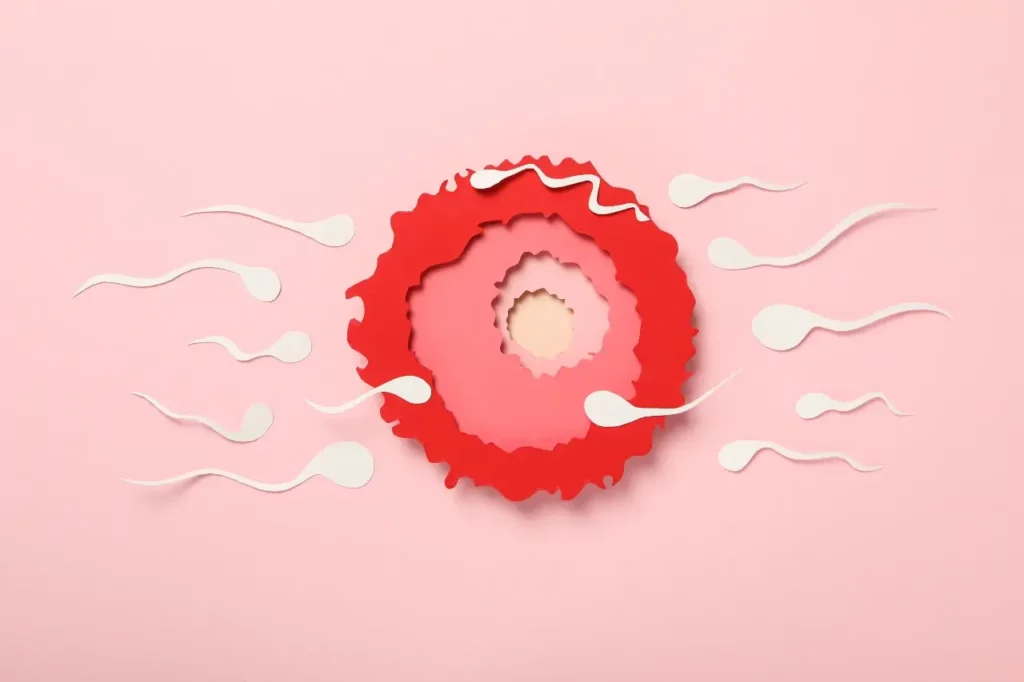
The ovulatory phase is a pivotal moment in the menstrual cycle when an egg is released from one of the ovaries, typically occurring around day 14 in a 28-day cycle.
What are my hormones doing?
This release happens in response to a surge in LH and FSH.
Oestrogen levels also peak just before the egg is released, which helps to trigger this LH surge.
Symptoms can include:
mid-cycle pain, often referred to as mittelschmerz, and an increased libido, which nature cleverly aligns with your most fertile days.
Tracking ovulation:
For those trying to conceive or using natural contraception methods, it’s crucial to be aware of the five days leading up to and including ovulation day.
Sperm can survive inside the vagina for up to five days, so these are your high fertility days.
However, it’s important to note that you can get pregnant at any time in your cycle, even during your period, although the likelihood is much lower.
Signs such as changes in cervical mucus and slight rises in basal body temperature can help predict ovulation.
Luteal phase
Following ovulation, the body enters the luteal phase.
If the egg isn’t fertilised, this phase focuses on preparing the body to either support a pregnancy or start a new menstrual cycle.
What are my hormones doing?
The ruptured follicle transforms into the corpus luteum, which secretes progesterone to maintain the uterine lining.
Oestrogen levels also rise, though not as high as before ovulation.
If no egg is implanted, progesterone levels drop leading to menstruation.
Common symptoms include:
Premenstrual syndrome (PMS), fatigue, and specific food cravings, all due to hormonal shifts—particularly the increase in progesterone.
Recommendations for emotional and physical care include:
Engaging in stress-relieving activities like yoga or meditation.
Also maintaining a balanced diet rich in magnesium and B6 (which may ease some PMS symptoms) and whole foods to combat cravings.
Also ensuring you get enough rest can help.
Managing stress and maintaining a healthy lifestyle during this phase can significantly alleviate symptoms and improve your overall well-being.
Also recognising and validating your feelings during this emotionally turbulent phase can also be really helpful.

How to track your cycle: tools and techniques
Understanding the nuances of your menstrual cycle can greatly benefit from effective tracking methods.
With advances in technology and a variety of tools available, it’s easier than ever to get a clear picture of your cycle phases and how your body changes throughout.
Apps
Many turn to smartphone applications like Clue, Natural Cycles or Flo to keep tabs on their menstrual cycles to try and fall pregnant or as a form of non-hormonal, natural contraception.
These apps have so many benefits, such as the ability to track a variety of symptoms, predict future cycles, and even monitor fertility windows.
They use algorithms to learn from the data you enter, which means the more you use them, the smarter they get, offering you increasingly accurate predictions about your cycle.
Wearable technology
For those interested in a more high-tech approach, wearable technology like smartwatches and smart rings can be quite useful.
These devices track physical changes such as basal body temperature fluctuations and heart rate variations that correlate with different phases of the menstrual cycle.
This data can help you understand when you’re ovulating or when to expect PMS symptoms, providing an easy and effective way to monitor your cycle.
Something that you should note is that basal temperature is different than the temperature that your regular thermometer tells you.
It’s more accurate because it measures to 2 decimal places (for example, 35.75℃ rather than just 35.7℃).
Calendar Method
For those who prefer a more traditional or straightforward method, simple calendar tracking can be very effective, especially for those with regular cycles.
If you have irregular periods, its better to stick with an app and pay close attention to your symptoms through your cycle to make sure youre not caught off guard.
Marking the start and end of your period each month can help you predict future cycles with reasonable accuracy.
Symptom Journaling
Documenting your daily symptoms can offer deep insights into your menstrual health.
By noting changes in cervical mucus, body temperature, mood, and physical symptoms like cramps or breast tenderness, you can begin to notice patterns.
This practice helps in better predictions and enhances your understanding of how your body uniquely responds to each phase of your cycle.
It can also help you realise if something isn’t quite right— extremely painful periods could be a sign of endometriosis of PCOS.

Empowering your menstrual health journey
Understanding the 4 menstrual cycle phases highlights how each phase impacts your reproductive health and overall well-being.
Tools like apps, wearables, calendar tracking, and symptom journaling help you tune into your body’s signals and understand its rhythms better.
This empowerment through knowledge helps you understand your body’s processes, making it easier to manage everyday life in sync with your cycle.
Continue to educate yourself and participate in discussions about menstrual health.
Conversations about menstruation often carry a stigma and can lead to feelings of embarrassment or secrecy.
By talking openly about menstrual health, we can destigmatise this natural biological process and foster a community where everyone feels comfortable sharing and gaining knowledge.
Encourage your friends, siblings, and even colleagues to speak openly about their experiences and share insights.
This openness not only supports personal growth but also builds a supportive network that can transform how society perceives menstrual health.
Remember that understanding your menstrual cycle is a huge step towards embracing and taking charge of your health.
Each piece of knowledge adds to a foundation that not only enhances your daily life but also supports long-term health and wellness.
Terminology
1. Menstrual Phase: This is the first phase of the cycle, (a.k.a a period), beginning with the first day of menstruation, where the body sheds the uterine lining built up from the previous cycle.
2. Follicle-Stimulating Hormone (FSH): A hormone secreted by the pituitary gland that plays a crucial role in the growth of ovarian follicles, which house the eggs prior to maturity and release.
3. Progesterone: A hormone released primarily in the second half of the menstrual cycle by the corpus luteum in the ovary. It helps maintain the uterine lining for a potential pregnancy after ovulation.
4. Oestrogen: A group of hormones that play an essential role in the development and regulation of the female reproductive system and secondary sexual characteristics. During the menstrual cycle, oestrogen levels rise as the egg matures, promoting a thickening of the uterine lining.
5. Ovulation: The release of a mature egg from one of the ovaries, typically occurring in the middle of the menstrual cycle. This is the body’s peak time for fertility each month.
6. Luteinizing Hormone (LH): A hormone produced by the pituitary gland that triggers ovulation and development of the corpus luteum.
7. Corpus Luteum: The remnant of the follicle that has released a mature egg during ovulation. It secretes hormones like progesterone and some oestrogen to support pregnancy during the early stages.
8. Mittelschmerz: A German term meaning “middle pain,” referring to the lower abdominal pain some women experience during ovulation.
9. Basal Body Temperature: The lowest body temperature attained during rest, usually measured immediately after waking up. It is often tracked to help detect ovulation, as a slight rise in temperature occurs after ovulation due to increased progesterone.
10. Premenstrual Syndrome (PMS): A group of symptoms linked to the menstrual cycle, typically occurring just before menstruation. Symptoms can include mood swings, tender breasts, food cravings, fatigue, irritability, and depression.
11. Cervical Mucus: A fluid secreted by the cervix, influenced by hormonal changes, which changes in consistency and quantity throughout the menstrual cycle, becoming more fertile (clear and stretchy) around ovulation.
]]>Sleep deprivation fogs your mind, and all you crave are a few uninterrupted hours.
But what if there was a solution?
Ever heard of a night doula?
In this article, we’ll give you everything you need to know about what is a night doula and why they’re worth every $.
These postpartum supports offer more than just a helping hand; they bring peace, rest, and a touch of normalcy back into the lives of weary new parents.
So, what is a night doula?
A night doula is someone who provides care, support, and guidance to new parents and their infants during the night.
They are a mix between a night nanny and a baby nurse, stepping in so you can have some ‘me time’ and get some much-needed rest.
Unlike other types of doulas, night doulas specialise in overnight care, focusing on everything from feeding and changing diapers to soothing and settling your baby back to sleep.
They might even do your laundry and cook up a storm during the night.
How do they differ from other healthcare providers, like baby nurses, midwives and postpartum doulas?
Well, the key lies in their approach, areas of expertise and scope of practice.
While baby nurses and midwives have a medical or nursing background, focusing on the physical care of the baby, night doulas bring a more holistic support system into the picture.
They care for the baby but also provide invaluable support and advice to parents, helping them navigate the murky waters of early parenthood with confidence.

What are the benefits of a night doula?
When welcoming a night doula into your home, the benefits are significant.
Studies show that hiring a night doula is linked with huge improvements in parents’ sleep quality.
Getting good-quality sleep plays a pivotal role in recovery and adapting to parenthood once your baby is here.
Sleep affects everything from how you adjust to the mental challenges of your new role to physical healing after childbirth.
Parents also experience lower stress levels, reduced mood swings and even lower chances of postpartum depression.
A night doula’s assistance can help you have a deeper understanding of a baby’s cues and needs.
This understanding improves bonding, fosters secure attachments and promotes infant well-being, laying down a resilient foundation for the new family structure.
With the support of a night doula, parents are often better prepared to tackle the hurdles of having a newborn.
What do night doulas offer?
Newborn care
This includes the basics like feeding, diapering, and soothing.
Whether it’s mastering the art of swaddling or deciphering different cries, night doulas have the expertise to handle it all, ensuring your baby is content and well-cared for.
Sleep routine establishment
Night doulas are armed with strategies to help establish healthy sleep routines for your baby.
This benefits the child in the long run and also helps parents get more consistent rest.
Emotional support for parents
Transitioning to parenthood can be a rollercoaster of emotions.
Night doulas provide a listening ear and reassurance, making them a great source of emotional support during this vulnerable time.
Feeding support
Whether you’re breastfeeding, bottle-feeding, or a bit of both, night doulas offer guidance and support to make feeding a h*ll of a lot easier.
This can be particularly beneficial in the early days of establishing breastfeeding, offering tips and techniques to help both mother and baby.

Night feeding with your doula
Breastfeeding
Night doulas are well-versed in the ins and outs of breastfeeding, from helping maintain a healthy milk supply to offering latching assistance.
They allow mothers to breastfeed their babies during the night without fully waking, making it easier to drift back to sleep afterwards.
By handling the logistics—bringing the baby to you for feeding and then taking care of settling them back to sleep afterwards—the doula makes night-time breastfeeding an easier process for everyone involved.
Bottle feeding
Whether it’s expressed breast milk or formula, night doulas are great at handling bottle feeds.
They can prepare bottles, feed the baby, or support parents who choose to do so themselves, ensuring that babies receive the nutrition they need with minimal sleep interruption for parents.
The effects of sleep-deprivation
The impact of sleep deprivation isn’t just feeling tired.
As mentioned earlier, It can lead to a range of health and psychological issues, from impaired immune function to heightened stress and anxiety.
Health and psychological impacts
Chronic sleep loss can affect everything from your mood to your physical health, increasing the risk of conditions like obesity, diabetes, and heart disease.
It also takes a big toll on your mental health, with increased risks of postpartum depression, anxiety, and cognitive impairment.
How doulas help
By taking over night-time care duties, a night doula gives parents the opportunity to have longer stretches of undisturbed sleep.
This support can significantly reduce the negative effects of sleep deprivation, helping parents stay healthier and more emotionally balanced.
How much do night doulas cost?
Hiring a night doula can cost between $25 to $65 USD every hour.
This depends on where you live, how experienced the doula is, and what service they offer.
It might seem like a lot to pay, but when you think about the immense benefits they can have on your family’s health and happiness, many families find they’re worth every penny.
Some insurance companies are starting to cover the cost of hiring a doula as they’re recognising doula support as an essential service.
And if you don’t have insurance or your insurance doesn’t cover it yet, you can always ask for people to put money towards hiring a doula instead of buying you baby shower gifts.
Choosing your night doula
Finding the right night doula requires some research and thoughtful consideration. Here are some steps to guide you through the process:
Step 1 — Research
Start by exploring doula directories, such as blissfulbirths.co to find potential candidates.
These platforms can offer a wealth of information and make it easier to locate doulas in your area.
You can also ask your family and friends if they know any that they can recommend.
Step 2 — Interviewing
Once you’ve narrowed down your options, set up interviews with the doulas.
This is your chance to ask about their experience, approach to care, and availability.
It’s also an opportunity to get a feel for their personality and whether it fits with your family’s vibe.
Step 3 — Alignment with family values and needs
It’s important to find a doula that understands and aligns with your family’s values and needs.
Discuss your parenting philosophy, your expectations for night-time care, and any specific support you’re looking for.
Whether it’s experience with twins, knowledge of breastfeeding, or a gentle approach to sleep training, make sure your doula can meet your needs.
A happier and healthier postpartum
Thinking about hiring a night doula?
It might be the kind of postpartum support you need.
It’s not just an investment in sleep; it’s about making life with your little one smoother and happier.
Every family’s needs are unique, but a night doula adapts to yours, offering just the right kind of support.
So, if you’re on the fence, why not look into it?
A night doula might be just what you need to transform those tough nights into something a bit more manageable, letting you and your family enjoy this special time to the fullest.
]]>It’s an adventure filled with joy, challenges, and a steep learning curve.
This is why new parents are hiring postpartum doulas after their little one arrives.
So what is a postpartum doula?
A postpartum doula provides support to families that, let me tell you, is worth every penny.
They offer a range of services including emotional support, practical help around the home, insider tips on baby care and feeding and a h*ll of a lot more.
Ultimately, they’re there to help you find your feet in the first few weeks of parenthood.
Sounds like something you need?
We’ve broken down what is a postpartum doula and put together a list of 13 reasons why hiring one might just be the best decision you make for your family.
What is a postpartum doula?
A postpartum doula is a helping hand for new parents right after their baby is born.
They’re different from birth doulas, who are there during pregnancy and support the mother through the labour and birth of their baby.
Postpartum doulas are there immediately after the baby arrives and normally stay for 6 weeks postpartum.
Some doulas offer the whole package, pregnancy, birth, postpartum — the whole shebang.
So, what do they do?
A lot, actually.
They’re there to listen and give emotional support when things feel tough.
They can also do practical stuff around the house, like making meals, tidying up, and even looking after the baby so you can have a moment to yourself.
This can be really handy when you’re tired and trying to figure out ‘how to do the parenting thing’.
They know everything there is to know when it comes to taking care of newborns, from feeding to getting them to sleep.
But it’s not about doing things for you; it’s about teaching you and building your confidence.
They don’t do medical stuff but are all about support and care, making those first few weeks with a new baby a bit easier.
Reason 1: Emotional support
The days following birth can be emotionally intense.
You might feel joy, exhaustion, and everything in between.
A postpartum doula offers you and your partner emotional support.
They create a space where you can talk openly about how you’re feeling without fear of judgment.
Whether you’re dealing with the ‘baby blues’ or just need to vent about the day-to-day challenges of parenthood, a doula listens and understands.
Their presence provides reassurance, reminding you that you’re not alone and it’s okay to have mixed emotions during this time.
Reason 2: Breastfeeding guidance
It’s no secret that breastfeeding is hard work and can be filled with ups and downs.
From latching issues, painful nipples and leak disasters to concerns about milk supply and mastitis, it’s easy to throw in the towel.
Many postpartum doulas also have lactation support qualifications.
They can offer tips on positioning, advice on how to encourage a better latch and support to make breastfeeding more comfortable for both you and your baby.
Having someone to guide you through this process at home means you can find solutions that work for your unique situation, making breastfeeding a more positive experience.
Plus, their support can boost your confidence, helping you feel more connected to your baby.
Reason 3: Newborn care tips
I’m sure you’ve heard the term ‘Babies don’t come with instruction manuals’.
It’s true.
When it comes to taking care of a newborn, many parents feel like they’ve been given a Rubix cube and told to figure it out.
Postpartum doulas are great at giving simple, practical tips that make a big difference.
They can show you things like how to swaddle your baby, help you understand what different cries mean, and share ways to soothe your little one.
Reason 4: Coping with sleep deprivation
Lack of sleep is something every new parent goes through, but it doesn’t have to knock you off your feet.
Postpartum doulas have the best tips to help you handle it.
They can give you tips on setting up a good sleeping space for your baby and suggest routines to help your baby sleep better and longer.
They can also give you education about the benefits of cosleeping and baby massage.
Sometimes, they can even look after your baby while you get some much-needed sleep.
There are even special doulas that will stay awake during the night to be there for the baby and whatever they need.
These are called night doulas, and they are a godsend for sleep-deprived parents.
Once you find a rhythm that works for you, you’ll have more energy to tackle the new challenges that come with motherhood.
Not to mention sleep is one of the key ingredients to a speedy postpartum recovery.

Reason 5: Household help
A postpartum doula offers an extra pair of hands when you really need it.
They help with household chores like washing clothes, making healthy meals, or tidying up the house.
They might even walk your dog and take your other kids out for a bit.
All the things that you don’t have the headspace or energy to deal with in the weeks following the birth.
This kind of help is a big relief for new parents who are busy with their baby and might feel swamped.
It means you can spend more time with your little one instead of worrying about all the housework that isn’t being done.
Reason 6: Support for the whole family
A postpartum doula isn’t just there for the mum and bub.
They’re there for everyone in the family.
They can help partners too, giving them advice, showing them how to care for the baby, and even giving them tips on how they can support the mum better.
And for the other siblings? The doula can help them understand what is going on and how they can help out too.
This makes sure everyone feels more confident and supported.
Having a doula around can make the whole family’s adjustment to a new baby smoother and more positive.
Reason 7: Mental Health Awareness
Navigating the emotional rollercoaster after having a baby can be tough.
Doulas are great at spotting the signs of postpartum depression (PPD) and anxiety, which is a big deal because catching these feelings early makes a huge difference.
In fact, research shows that women who had doula support during labour, birth and postpartum saw a whopping 64.7% drop in the chances of experiencing postpartum anxiety or depression.
That’s impressive.
Doulas aren’t therapists, but they know the importance of getting the right help, and they also have an extensive list of contacts for times like these.
They can gently suggest seeing a professional if they think it’s needed, and help you find someone who you are comfortable with.
This makes it easier for parents to seek support in the early stages.

Reason 8: Physical Recovery Tips
Let’s be real, your body goes through a lot during birth, and the aftermath can feel like you’ve run a marathon, and then some more.
Doulas come armed with tips and tricks to help your body recover.
They can suggest comfortable positions for feeding your baby, show you gentle exercises to strengthen your core when you’re ready, and remind you to drink plenty of water.
They have secret remedies for sitz baths, steaming broths and delicious teas that make postpartum recovery a lot faster… and a bit more like a day at the spa.
They help you take it easy while encouraging you to take small steps towards recovery.
It’s not about rushing; it’s about finding the right pace for your body.
With a doula’s guidance, you can navigate the physical recovery process with a bit more ease and maybe even a few laughs along the way.
Reason 9: Nutritional Advice
Eating right after having a baby isn’t about getting back in shape;
It’s important to fuel your recovery and, if you’re breastfeeding, for milk production too.
Doulas can guide you through the maze of postpartum nutrition, suggesting meals that are not only nourishing but also boost your milk supply.
They know that a well-balanced diet can make a significant difference in how you feel and how well you can feed your baby.
Their advice is practical, focusing on foods that are easy to prepare and rich in the nutrients new mums need most.
With a doula’s guidance, you can ensure your body gets the right fuel to heal and provide for your baby.
Reason 10: Education on Baby Development
As I mentioned earlier, babies don’t come with manuals, but luckily, doulas pretty much serve as the next best thing.
They can teach you about the different stages of baby development, so you’re not left wondering why your newborn suddenly seems to think sleep is optional.
Plus, they’re like baby whisperers, able to tell you exactly what each cry means—hungry, tired, or in need of a clean nappy.
This is priceless, turning you into a bit of a baby whisperer yourself.
It’s not magic, just the wisdom passed on from someone who’s been there, done that, and got the baby vomit-stained T-shirt to prove it.

Reason 11: Community Resources
Finding your tribe as a new parent can feel a bit like online dating but without the awkward dinners.
Doulas are great at connecting you with local community resources and support groups, making it easier to find people who get what you’re going through.
They know all the best spots for parent-and-baby classes, breastfeeding support groups, and even coffee mornings.
With a doula’s help, you won’t just survive the early days of parenthood;
You’ll thrive, surrounded by a community of new parents who are going through it too.
Reason 12: Flexible Support Customised to Your Needs
Every family is unique, and doulas get that.
They’re like chameleons, adapting their support to match exactly what you need.
Whether that’s someone to talk to about your birth experience, a guide to your baby’s first weeks, or just an extra pair of hands when you’re at your wit’s end.
They can dial up the emotional support, share more practical baby care tips, or step back to give you space, depending on your day.
It’s this flexible, tailor-made approach that makes doula services so valuable.
You’re not getting a one-size-fits-all solution;
You’re getting the support that feels like it was designed just for you and your baby, making the whole parenting journey feel a bit more manageable.
And a lot less lonely.
Reason 13: Building Your Confidence as a New Parent
Becoming a new parent often brings a lot of self-doubt.
Research shows that hiring a doula postpartum helps to boost new mums’ (and dads’) confidence.
This kind of support is great for parents who feel a bit isolated or who don’t have much help.
Doulas are all about helping you trust yourself more.
They’re there to remind you that you’ve got this, what you’re going through is normal, you know your baby best, and you’re doing a good job.
This kind of encouragement is a big help for your mental health.
Parents who have a doula feel stronger and more sure of themselves, not just right after the baby is born, but as they continue on their parenting journey.
Finding the Right Postpartum Doula for You
Finding a doula that fits your needs can make a big difference in your postpartum experience.
Start by looking in local parenting groups or doula directories.
When you have a few names, reach out and ask them about their experience, how they support new parents, and what their approach to care is.
It’s important to choose someone who you feel comfortable with and whose views on caring for a newborn align with yours.
Asking the right questions is key to understanding if a doula is the right match for you.
Ask about their experience with breastfeeding support, how they handle situations where you and your baby are struggling, and how they can support your partner too.
You want someone who listens to your concerns and respects your choices.
When you find a doula who understands what you’re looking for and offers the support you need, you’ll feel more at ease and supported during this big change in your life.
Going It Alone Isn’t Your Only Option
Stepping into parenthood is a big move, and it’s totally fine if the idea of doing it solo is a bit daunting.
Remember, having a postpartum doula by your side can make a world of difference.
They’re there to guide you through the new terrain of caring for a newborn, lifting your spirits, and taking some of the weight off your shoulders.
From helping you understand your baby’s needs to boosting your confidence and providing much-needed reassurance, a doula’s impact is significant.
It’s about enhancing your strengths and giving you the support you need to thrive, not just survive.
And let’s be honest, everyone needs a bit of help sometimes.
If you’re considering a doula, why not reach out for a chat?
A consultation doesn’t tie you down to anything—it’s just a first step to see how a doula could fit into your family’s journey.
It’s about finding what works for you and embracing the support that could make all the difference.
So, take a breath and consider opening the door to a helping hand—you might just find it’s exactly what you need.
]]>There’s joy and excitement, but also worry and lots of questions and uncertainty.
You might have already heard of a birth doula but for those who don’t know what is a birth doula — a doula is someone trained to help and support women through childbirth.
They are there to answer questions, offer help, and make the process of giving birth a bit easier.
This article is here to share some clear facts about why having a birth doula can be a good idea.
We will talk about seven amazing benefits of hiring a birth doula during pregnancy, giving you helpful information to make good choices as you prepare for your baby’s arrival.
What is a birth doula anyway?
The birth doula, even though it has been around for centuries, is still quite a new concept that is just starting to become more well-known worldwide.
A birth doula is by your side every step of the way as you adventure through pregnancy and childbirth.
They’re there to provide emotional, informational, and physical support, making the journey a lot easier and less daunting.
Now, you might have heard of midwives and obstetricians too, it’s important to know the difference:
- Doula: They’re like your ultimate childbirth support. They offer support to you and your partner before, during and sometimes after birth. They also help you with breathing techniques and provide massages but keep in mind, they don’t offer medical advice.
- Midwife: They are medically trained to assist during pregnancy and actually help deliver the baby, especially in straightforward, low-risk births. Midwives work either in the hospital or as home birth midwives.
- Obstetrician: They are the doctors in the mix, handling pregnancies, deliveries, and everything that follows, especially in more complex or high-risk situations. These are the doctors who deliver babies via c-section.
The cost factor: is it worth it?
Hiring a birth doula comes with a price tag, and it can swing between $700 to $4,000.
Location, experience, and the services they offer play a big part in the cost.
If you’re in a bustling city, expect the cost to be on the higher side.
Insurance usually doesn’t cover doula services, but some doulas offer discounted rates depending on your financial situation so make sure you ask.
Though the initial cost might make you wince, think about the long-term benefits.
Having a doula by your side could lessen the chances of needing pricier medical interventions, not to mention a more positive birth experience.

The Science-Backed Benefits
Emotional and physical support
Having a birth doula by your side is like having a calming friend who knows the ropes.
They offer a reassuring presence that helps lower stress and anxiety during labour.
Their support isn’t just emotional; it’s physical too.
They are there to help with breathing techniques, and massages, and to help your partner support you throughout your labour.
Studies show that this emotional and physical support can actually shorten labour, reduce the chances of needing a c-section and make the overall childbirth experience more positive.
Enhanced communication with healthcare providers
The journey through childbirth can be a bit of a whirlwind, and having a doula can make the communication between you and your healthcare team smoother.
Doulas help bridge the communication gap between families and healthcare providers, ensuring that your wishes are heard and respected.
They can help explain medical procedures, encourage you to ask questions, and make sure you understand what’s happening every step of the way.
Especially for migrant women, bilingual doulas can help bridge linguistic and cultural gaps, making communication with the healthcare team easier and more effective.
Lowered risk of medical interventions
The presence of a doula during labour is like having an advocate who encourages natural birth methods, which often leads to a lower likelihood of medical interventions.
For instance, statistics indicate a significant reduction in the rates of C-sections when a doula is involved.
In one study, there was a significant reduction in cesarean rates and epidural use for pregnant women who were supported by a doula during their labour.
Also, having a doula can lead to fewer instances of forceps or vacuum extraction births, as they encourage and assist in natural birth techniques. They provide the necessary emotional and physical support, enabling a more natural flow of labour which often requires fewer medical interventions.

Reduced labour time
The emotional and physical support they offer helps to create a relaxed environment which is essential for a smooth labour process.
Studies have shown that the calming presence and the continuous support of a doula contribute to shorter labour times.
The stress-reducing effect of a doula’s support helps in promoting better progress in labour, making the experience less of a marathon and more of a sprint.
By keeping you relaxed and confident, a doula helps facilitate a quicker labour process.
Natural pain management
Doulas come equipped with a toolkit of non-medical pain management strategies that can be a game changer during labour.
They’re skilled in techniques such as breathing exercises, massage, and positional changes that can help manage the discomfort.
For instance, they may suggest different positions to help ease the pain and facilitate a smoother labour.
The effectiveness of these strategies is well documented.
Women supported by doulas have been found to use epidural and medical pain management less, thanks to the coping strategies provided by doulas during labour.

Postpartum support
Once the baby arrives, a doula doesn’t just pack up and leave.
They continue to provide invaluable support during the postpartum period too.
This support can range from giving advice on infant feeding practices like breastfeeding to offering tips and tricks for calming your newborn.
They also assist in emotional and physical recovery, ensuring new parents are coping well.
They might answer questions about infant care, provide recommendations, and sometimes even help with meal prep and light household chores.
Their expertise in maternal postnatal recovery, infant care, and breastfeeding, makes them a great support system for the entire family during this period of adjustment.
Positive birth experience
Hiring a doula can significantly enhance the overall birth experience.
They bring a calming presence and knowledgeable support that can make the process less stressful and more empowering.
Doula-assisted mothers were found to be four times less likely to have a low birth weight baby, and two times less likely to experience a birth complication involving themselves or their baby.
There’s a 31% decrease in the risk of being traumatised by the birth experience when a doula is involved.
The continuous support, the advocacy in communicating with healthcare providers, and the non-medical pain management strategies all contribute to a more positive and satisfying birth experience.
Plus, the postpartum support ensures that the positive experience extends beyond the delivery.
Unpacking your thoughts
As we wrap up this journey into the world of doulas, it’s a good time to sit back and reflect. Perhaps jot down any questions or thoughts that popped up while reading.
These notes could be a great starting point for discussions with a doula during your next consultation to make sure you find the right one for you.
Every pregnancy is a unique adventure with its own set of challenges and joys.
What’s most important is ensuring you have the right support to make the experience as comfortable and safe as possible.
Whether that support comes from a doula, a midwife, a doctor, or a combination, the goal is to have a positive, healthy birth experience.
So take your time, explore your options, and choose what feels right for you and your growing family.
]]>It happens so fast and sometimes catches us off guard.
As the temperatures drop, we bundle ourselves up in cosy layers to stay snug and warm.
But what about our little ones?
Dressing infants for winter can be a challenge.
In this article, we’ll explore the top five essential winter clothes for infants to ensure they stay comfortably warm and cosy during those chilly months.
So, grab a cup of hot cocoa and let’s dive in.
Navigating Your Baby’s First Winter
The joys of experiencing your baby’s first winter.
It’s a whole new adventure filled with cuddles, hot cocoa, and adorable winter outfits.
But when it comes to dressing your Infant, there are a few things to consider.
Here are some key factors to keep in mind while choosing winter clothes for infants:
Material
Opt for soft, gentle fabrics like cotton, bamboo or fleece that won’t irritate your baby’s delicate skin.
Avoid materials that may cause itching or discomfort.
We all know an uncomfortable baby is an unhappy baby.
Warmth
Look for clothing items that provide ample warmth without being too bulky.
Thin layers with good insulation are ideal to regulate your baby’s body temperature.
Bamboo is known for its thermoregulating qualities.
Texture
Pay attention to the texture of the clothing.
Smooth, non-scratchy fabrics are generally more comfortable for babies.
Breathability
While keeping your baby warm is essential, it’s equally important to choose breathable fabrics to prevent overheating.
Look for clothes that allow airflow to keep your little one cosy and comfortable.
Again, bamboo is a great choice.
Layers
Layering is the key to adapting to changing temperatures.
Dress your baby in multiple thin layers that can be added or removed as needed to keep them cosy without overheating.
Age and Sizing
Babies grow quickly, so be mindful of choosing the right size.
It’s best to opt for slightly larger sizes to accommodate growth and ensure comfortable movement.

Checklist of Essential Winter Baby Gear
Now that we know what to keep in mind, let’s dive into the essential winter baby gear you’ll need to keep your little one snug as a bug.
Winter Baby Onesies
Baby onesies are a staple in any infant’s winter wardrobe, but did you know there are different onesies for different seasons?
In winter, you’ll want to look for onesies that provide an extra layer of warmth.
These’ll have long sleeves and be made from thicker materials like fleece or cotton blends.
Remember to choose onesies with easy-to-use snaps or zippers for quick diaper changes.
Snowsuit/Bunting
When the snow starts falling, it’s time to break out the snowsuit or bunting.
A snowsuit is like a cosy full-body winter outfit for your little munchkin. It typically features insulation, a water-resistant outer layer, and attached mittens and booties.
Reserve the snowsuit for colder days or when you plan to spend time outdoors.
Mittens, Hats, and Booties
Accessories are the cherry on top of your baby’s winter ensemble.
Mittens, hats, and booties are essential for keeping those tiny fingers, ears, and toes warm and protected.
Look for soft, stretchy mittens that won’t restrict movement.
Hats with ear flaps or a snug beanie are perfect for shielding your baby’s sensitive ears.
And those adorable booties?
They’ll keep little feet toasty as you explore the winter wonderland.
And if you’re looking for the perfect baby shower present, these are all great choices.

How to Layer Your Baby’s Clothing?
By layering your baby’s clothing, you can easily adjust their comfort level as temperatures fluctuate throughout the day.
Plus, it’s much easier to remove a layer if your little one starts feeling too warm.
For Indoor Comfort
When you’re indoors, aim to keep your baby comfortably warm but not overheated.
Remember, babies have a harder time regulating their body temperature than we do.
Opt for a breathable onesie as the base layer, and add a lightweight sweater or cardigan if needed.
Keep blankets nearby for extra snuggles during naptime.
Venturing Outdoors
Heading out for a winter stroll or a snowy adventure?
Layering is essential here.
Start with a onesie or a base layer, add a sweater or a jacket, and top it off with a snowsuit or bunting.
Don’t forget the accessories – hats, mittens, and booties will keep your baby protected from the chilly air.
Adjust the layers based on the temperature and your baby’s comfort level.
Safely Strapped
If you’re travelling by car or pram, ensure your baby is dressed comfortably and safely strapped.
Avoid bulky clothing that may interfere with the straps’ effectiveness.
Instead, dress your baby in thinner layers and use blankets or covers to keep them warm during the journey.

How to Dress Your Baby for Bed
Bedtime can be a tricky time when it comes to dressing your little one for winter nights.
Here are a few different ways you can dress your baby for bed:
Swaddle
For newborns, swaddling can provide a sense of security and warmth.
Swaddle your baby in a soft and breathable muslin wrap and then add a blanket, making sure their face is uncovered for easy breathing.
Sleep Sack
As your baby grows, you can transition to sleep sacks.
These wearable blankets come with armholes or sleeves, providing freedom of movement while keeping them cosy and safe.
Onesie
If the room temperature is mild, a comfortable onesie may be all your baby needs for a good night’s sleep.
Opt for long-sleeved onesies made from soft, warm and breathable fabric.
Remember, it’s essential to consider the temperature in the room and adjust your baby’s clothing accordingly.

Some great picks for winter baby clothes
Now that we’ve covered the basics, I’ve compiled some options to get you started on your hunt for winter clothes for infants:
Baby snowsuit: Columbia snuggly bunny bunting
- Perfect for the coldest environments, it offers optimal protection.
- Water and wind-resistant taffeta shell keeps the winter elements at bay.
- The interior hood and arm sleeves are lined with a velvety soft microfleece.
- Fold-over hand and feet enclosures ensure extra warmth for your baby.
Winter jacket: The North Face baby reversible perrito hooded jacket
- Made of 100% fleece and reversible for versatile styling.
- Water-repellent on both sides, it’s ready for wet weather adventures.
- The three-piece hood and fold-over mitts keep your baby’s head and hands snug.
- Plus, it’s made with 75% recycled and responsibly sourced materials, making it an eco-friendly choice.
Sleep sack: Kyte Baby soft bamboo sleeping bag
- Crafted from Bamboo Rayon Fabric, offering softness and breathability.
- Has a zipper flap at the top to avoid irritation while your little one sleeps.
- It’s quilted inside to prevent the inner lining from bunching up, ensuring maximum comfort.
- With a wide range of colours and patterns, you’re spoilt for choice.
Baby blanket: Konssy baby blanket
- Made with a 100% cotton (Muslin) front and ultra-soft dot fleece fabric on the back.
- This warm and durable double-layer blanket is gentle on your baby’s skin.
- It’s large enough to easily wrap or swaddle your little bundle of joy.
- this is a great gift for a baby shower.
Winter booties: Burt’s Bees baby booties
- Made from 100% cotton, these booties are perfect for sensitive skin.
- They have a snap ankle secure fit with two adjustment options for a snug fit.
- Combed and ring-spun for durability and softness.
Baby hat and mitten set: 7AM baby hat & mittens set
- The hat has an adjustable 2-snap neck closure and Sherpa lining for warmth.
- The mittens have a fold-over hook & loop closure and inner palm grip.
- With wrist elastic and side snaps to attach the pair together, you don’t have to worry about lost gloves.
- The plush lining, water-repellent soft outer shell, and soft insulation make this set great for colder temperatures.
Enjoy Winter with Your Baby
Finally, remember, the goal is not just to keep your baby warm but also to enjoy the season.
Winter is a magical time for children, full of new experiences.
The sight of the first snowfall, the feeling of a snowflake on the skin, the fun of a sleigh ride – these are all experiences that you and your little one can enjoy.
Dressed in the right winter clothes for infants, your baby can enjoy their first winter safely and comfortably.
So, whether you’re indoors sipping hot cocoa or outdoors building a snowman, with these suggestions for winter clothes for infants, your baby will be ready.
Embrace the cold, enjoy the snow, and make beautiful winter memories with your baby!
]]>At first, it was to manage her acne and periods, but later it became a contraceptive against unplanned pregnancies.
Now, in her early twenties with the thought of having a baby in the next couple of years, she’s coming off the pill to prepare.
The big question on her mind is how her long-term use of birth control affects fertility.
But it’s not just Amelia, many women are in the same boat, curious about the link between birth control and their fertility.
Social circles and social media are filled with theories, yet there are no clear answers.
In this article we delve into the under-discussed truth of how birth control impacts fertility, moving beyond hearsay and down to the facts.
The birth control basics: a refresher
Birth control, as the name suggests, is about controlling when you want to have a baby.
The main job of birth control is to temporarily stop pregnancy from happening.
There are several types you might have heard of or even used.
Common types include the pill, injection, implant, and the hormonal intrauterine device (IUD).
Now, let’s talk about how well they work.
Generally, they’re all pretty good at doing their job, boasting about 99% effectiveness when used right.
Yet, that tiny 1% can sometimes throw a curveball.
Despite the odds, there’s a slim chance of pregnancy.
A few of my friends can vouch for this, having had surprise pregnancies while on hormonal birth control.
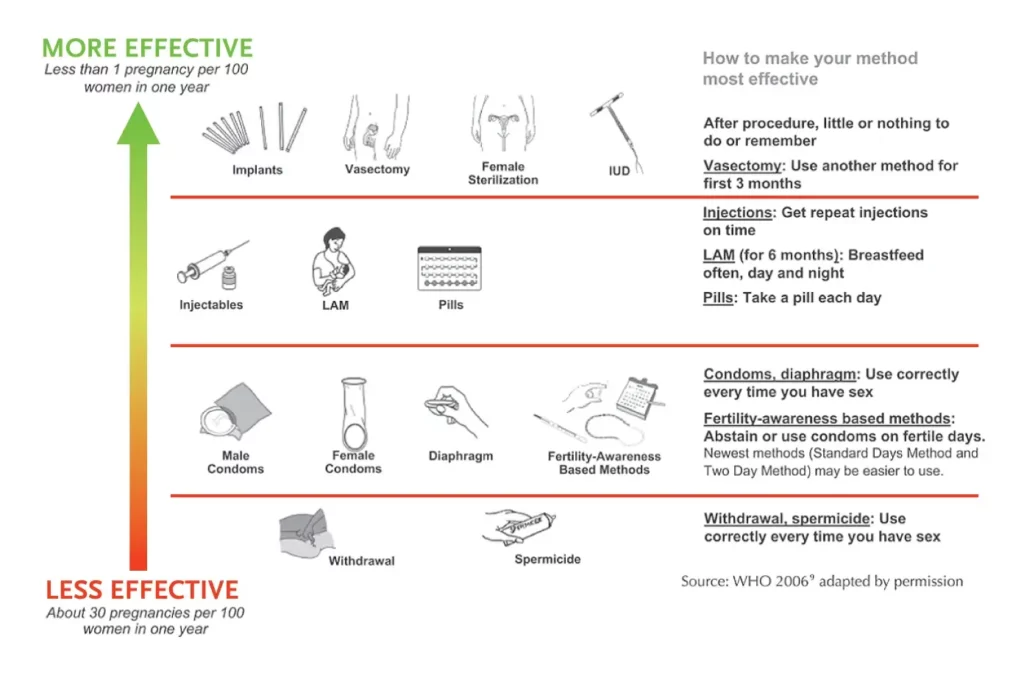
How does birth control work anyway?
The science behind birth control is fascinating yet simple.
Let’s break it down:
Suppressing ovulation:
They release hormones that tell your ovaries to take a break from releasing eggs.
No egg, no pregnancy.
Thickening the uterine lining:
This makes it harder for a fertilised egg to attach to your uterus and grow.
Imagine trying to stick a poster on a rough, uneven wall — it’s not easy.
Altering the cervical mucus:
The mucus turns into a sort of sticky guard, making it tough for sperm to swim through and reach the egg.
These mechanisms work together to keep the sperm and egg apart, like a well-coordinated security team at a high-profile event.
The journey back to your natural cycle
The next big question is: what effect do these hormones have on our bodies and how does that effect our fertility?
According to a study done on hormonal contraceptives, the synthetic hormones found in contraceptives interact with the body’s natural hormonal processes, leading to temporary prevention of pregnancy.
Synthetic hormones can cause a variety of side effects such as changes in mood, headaches, and breakthrough bleeding between periods.
The journey to reset hormones post-contraception can vary widely among individuals.
The hormonal balance in the body needs time to readjust once synthetic hormones are no longer being introduced.
While the synthetic hormones exit the body relatively quickly after you stop taking your contraceptive, the body’s natural hormonal rhythm may take some time to re-establish.
This could impact menstrual cycle regularity and fertility temporarily.
The timeline for hormonal reset can range from a few weeks to several months or even a year in some cases.
Factors such as the type of contraceptive used, the duration of use, and individual physiological differences play a significant role in this timeline.
Transitioning off birth control isn’t always a smooth ride though.
Take my friend Lilly for instance.
After coming off birth control, it took a good three months before her period found its rhythm again.
Those months were like a mix of unpredictability and frustration.
When the period did decide to make an appearance, it chose the oddest hours, catching Lilly off-guard.
On top of the fear of having irregular periods long term, intimacy became a game of Russian Roulette with her partner, the worry of an unplanned pregnancy before they’re ready, looming over them.
As said in the study, every narrative is unique.
Some wave goodbye to birth control and find their cycle snapping back into its routine almost instantly, while others play the waiting game for a year or more.
It’s a stark reminder of the individuality of our bodies, each responding in its own time and manner.

What the studies say
So, what does the science unveil about fertility post-birth control?
Research mostly comforts us with positive notes – indicating little problems returning to fertility post-discontinuation.
Yet, it’s hard to shake off the scepticism considering the huge profits pharmaceutical companies rake in from birth control sales yearly.
It raises a brow on whether the narrative is tinted rosy.
Additionally, studies often paint with a broad brush, leaving room for overgeneralisation.
They might not echo the entire spectrum of experiences out there.
Birth control, while suppressing ovulation, can also mask underlying issues.
So, when one decides to step off the contraceptive train, they might stumble upon fertility issues that had gone unnoticed for years.
This brings to light that while some women transition smoothly from contraceptive use to natural cycles, others may uncover a different story.
It’s a complex interplay, one where individual bodies react distinctively to the cessation of birth control.
It accentuates the importance of having a personalised lens, rather than a one-size-fits-all approach when discussing the impact of birth control on fertility.
It’s important to talk about how irregular periods and fertility are connected.
Irregular cycles can show that a woman’s ability to have a baby isn’t at its best, which can be a problem for those wanting to have a baby soon.
Understanding this link is essential and makes it easier for you to make smart choices when you’re thinking about coming off birth control to prepare to have a baby.
Prepping for Pregnancy Post-Pill
Now, if the thoughts of tiny toes and baby giggles are dancing in your mind, here are some steps to prep your body as you transition from birth control:
Track Your Cycle:
Apps like Flo or Natural Cycles can be your diary, helping you keep track of your menstrual cycle, and symptoms and identifying your fertile window.
Eat Healthy:
A well-balanced diet not only nourishes your body but preps it for the prospective pregnancy.
Include a rainbow of fruits, veggies, whole grains, lean proteins, and healthy fats in your diet.
Stay Active:
Regular exercise keeps the body fit, ensuring it’s in prime condition for what lies ahead.
It doesn’t have to be rigorous; even a daily walk in the park works wonders.
Mind the Stress:
Keep stress at bay, maybe with meditation, yoga or even seeing an osteopath.
A calm mind fosters a healthy body.
I’m sure you’ve heard someone say at least once “It’ll happen when you’re not thinking about it”.
Consult a Healthcare Provider:
If you are still having trouble and are a bit worried, having a chat with a healthcare provider can provide personalised advice based on your health and medical history.
A Personal Takeaway
Diving into the waters of how birth control affects fertility is like opening a book full of important stories.
Each page turned sheds light on something new.
For women like Amelia and Lilly, this knowledge is key.
It opens doors to planning, to making choices that are in tune with their dreams and their bodies.
So, what’s the big picture?
It’s about awareness.
Knowing how birth control interacts with your body allows you to plan your steps, whether it’s preventing pregnancies now or embracing motherhood in the future.
It’s about being the captain of your own ship, steering through the waters of reproductive health with confidence.
]]>Scrolling through what feels like an endless list of birthing options.
Traditional hospital birth, birthing centres, home birth — and now, freebirth has popped up on your radar.
Intrigued?
Before we dive deep, let’s clarify that freebirth isn’t a trendy Instagram hashtag or a rebellious statement against modern medicine.
Nope, it’s more complex than that.
Freebirth is the choice to give birth without the assistance of a medical healthcare provider.
No midwife, no obstetrician, no nurse.
It’s just you, your support circle, and the unfiltered experience of bringing a new life into the world.
For some, it’s exactly what they envisioned; for others its terrifying.
To help you make your decision, we have put together seven important questions that you’ll definitely want to consider.
Grab a herbal tea, put your feet up, and let’s get to it.
What is freebirth?
In its purest form, freebirth—also known as unassisted childbirth—is the act of giving birth without the presence of a doctor or midwife.
If you think this sounds a bit “old-school,” you’re not wrong.
Historically, birth was always a natural process, often facilitated by traditional birth helpers in the community.
However, around the late 1930s, the medical model of childbirth started to become the norm.
The perception shifted, and birth became something that heavily relied on the help of medical experts.
C-section rates skyrocketed and home births became taboo and only something that ‘hippies’ did.
Fast forward to today, and there’s a growing movement of people rethinking this narrative.
Many are embracing freebirth as an option that gives control back to the mother and her baby.
Why some choose the freebirth path?
It’s easy to cast judgement, especially when the topic is as intimate and important as giving birth.
But there are genuine reasons why some women opt for freebirth.
First off, there’s the financial aspect.
Having a baby isn’t cheap, and going the traditional hospital route can feel like adding fuel to a fire of expenses.
Freebirth, with its lack of medical intervention, is generally lighter on the wallet.
But here’s the thing: if things take an unexpected turn, those saved pennies might end up as an expensive emergency fund.
Then there are women who are feeling let down by the healthcare system.
An Australian study brought something important to light: maternity care often falls short of being truly woman-centred.
In the ideal world, each woman would be given personalised, woman-centred care and be supported to have the birth they desired.
But unfortunately, many women report feeling unsafe, unsupported, and unheard in their previous birth experiences.
Another study found that 1 in 3 women who go through the hospital system for their births come out with birth-related trauma as a result.
It’s a serious trust issue that makes freebirth more appealing.
And it’s not just about the lack of faith in the system.
For some, freebirth is a way to reclaim power over their bodies and to be in full control of the birth process.
It’s the desire for a calm, uninterrupted space where the natural physiology of labour can be the main focus.
No clinical distractions, no unsolicited advice—just a deeply personal experience.
The legal side of freebirth
Navigating the maze of freebirth legality can be a bit like trying to assemble flat-pack furniture without instructions.
You’re in new territory and things can get confusing, fast.
In many parts of the world, freebirth is legal, yet it occupies a sort of grey area.
Medical professionals rarely recommend it, but they also can’t stop you.
However, in places like Dubai or Indonesia, the situation is more black and white.
In fact, homebirths and water births, let alone freebirths, are actually illegal.
Surprisingly, despite these laws, many local women still choose this path, though it’s normally made to look like an accident.
Choosing freebirth means you’re signing up for some big responsibilities.
You’re becoming the person who is solely responsible for the welfare of your baby, so it’s important to be informed and prepared.
Before starting on this journey, consider the legal implications; it’s one more layer in your decision-making process.
And when it comes to giving birth, you’ll want as few surprises as possible.

7 Questions you should ask yourself before choosing freebirth
Before we jump into these questions, remember one thing: this is about you and your choices.
Every pregnancy is unique, and what feels right for one person might not work for another.
So let’s delve into the seven questions that can help you shape your freebirth decision.
Are You Comfortable Without Medical Supervision?
The first hurdle to consider is the absence of medical professionals.
No doctor, no midwife—just you, your support system, and the baby.
Freebirth isn’t everyone’s cup of tea for this very reason.
If you prefer the comfort of having someone medical to guide you without opting for a hospital birth;
Remember there are options like home births with experienced midwives and doulas present.
Do You Have a Support System in Place?
Even if it’s just you and your partner, a support system is crucial.
If something goes off course, who will you call?
While many doulas won’t attend freebirths due to legal and liability reasons, family and close friends can still offer valuable emotional support.
How Will You Handle Potential Complications?
Things can get unpredictable during childbirth, even when everything is going smoothly.
Have you researched and prepared for situations like breech birth or haemorrhaging?
How close is the nearest hospital if needed?
Knowing what steps to take could make a world of difference.
Are You Prepared for the Aftercare?
Once the baby is here, the journey is far from over.
From cutting the umbilical cord to cleaning up, are you ready for what comes next?
Make sure you’ve got all your supplies ready and perhaps even a post-birth plan to ease into life with a newborn.
What’s Your Pain Management Plan?
It’s no secret that childbirth can be intense and painful.
If you find that the pain becomes too much, how will you plan to manage the pain without medical interventions like epidurals?
Some turn to natural remedies, like heat, counter pressure, massage and breathing techniques.
It’s a personal choice but one that needs careful thought.
How Will You Monitor the Baby’s Health?
When it’s just you and your loved ones in the room, monitoring the baby’s health is entirely up to you.
Do you know the signs of distress?
Do you need to have equipment, like a fetal doppler, to check on the baby?
Remember, you’re the first line of help here.
Are You Emotionally Ready for the Experience?
Last but by no means least, this is a big emotional commitment.
There’s empowerment in freebirth, but also stress and fear.
Assess your emotional preparedness.
Are you ready to be your own advocate every step of the way?
Are you mentally prepared if something does go wrong?
The answers to these questions will offer you a panoramic view of whether freebirth aligns with your needs and wants.
And if you find that it doesn’t, there are plenty of other paths leading to the same beautiful destination: meeting your baby.

Risks and controversies around freebirth
No path in life is without its bumps and turns, and the freebirth journey is no different.
While the risks involved in Freebirth may be similar to those in hospital or home births—things like fetal distress or postpartum haemorrhage—the key difference is immediate access to medical help.
If something goes south during a Freebirth, you’re essentially on your own until help arrives.
And sometimes, that delay can be the difference between life and death.
Now, let’s talk about the elephants in the room: the controversies and stigmas.
It’s not uncommon for medical providers to refuse to offer advice if you’re considering freebirth.
It’s not that they don’t have opinions; it’s that they’re often wary of the legal implications if something goes awry.
It’s a sticky situation that leaves many would-be freebirthers feeling isolated and unsupported.
And then there’s the social side of things.
Friends and family suddenly become armchair obstetricians, offering unsolicited advice that ranges from concerned to downright hurtful.
“You don’t care about your baby’s life” is a phrase that sadly, many women who choose freebirth have heard more than once.
The reality is that opting for freebirth isn’t an easy decision, nor is it one made lightly.
It comes with medical, ethical, and social dilemmas that you’ll need to navigate carefully.
But knowledge is power, and the more you understand the nuances, the better prepared you’ll be.
Preparing for freebirth: a checklist
You’ve mulled it over and decided freebirth might be the path for you.
Now what?
Here’s a brief checklist to set you on your way:
- Education: Do your research. Know the pros and cons, and educate yourself on the medical aspects of childbirth.
- Consult: Speak to healthcare professionals. While they won’t be present, their advice could be invaluable.
- Plan: Create a comprehensive birth plan. Know what you will do in case of complications.
- Support System: Make sure you have a reliable support system, even if it’s just one person.
- Supplies: Stock up on all the essentials—clean towels, sterilised scissors, a birthing pool if you wish, and so on.
- Location: Prepare the space where you plan to give birth, ensuring it’s clean and comfortable.
There’s no one-size-fits-all birth
Childbirth is an intensely personal journey, there’s no one-size-fits-all solution.
Whether you’re drawn to the serenity of freebirth or find comfort in a more medical setting;
What matters most is making the choice that aligns with your unique needs, beliefs, and circumstances.
Take time to explore, question, and prepare.
]]>Thrilling, yes.
Unpredictable, absolutely.
A bit scary?
For many, it’s a hard yes.
But what if you had someone riding that coaster with you, guiding you through every twist and turn?
That, in a nutshell, is a doula.
A doula is the Gandalf to your Frodo—a wise guide who’s seen this adventure unfold countless times and knows the best paths to take.
They’re there to give you emotional support, share crucial knowledge, and, on occasion, massage your back in just the right way.
From home births to hospital rooms, they make the environment feel safer and more welcoming.
But here’s where it gets interesting: not all doulas are the same.
Yep, you heard it right.
There are several types of doulas to choose from, each offering something unique to your individual experience.
So how do you know which doula is the perfect fit for you?
Good question.
We’re about to explore the 6 main types of doulas out there.
Whether you’re pregnant with your first child, or adding another cub to your pack, you’ll find this guide useful.
So let’s get to it, shall we?

What is a Doula?
When it comes to childbirth, doulas are the unsung heroes in the room—well, next to you, of course.
They’re not nurses, and they’re not midwives.
Think of them as professional birth companions.
Their role?
To make your childbirth as smooth, memorable, and joyful as it can be.
Doulas are the multitaskers of the maternity world.
They offer emotional support, serve up evidence-based knowledge, and even get hands-on with comfort measures like back massages and aromatherapy.
If birth were a movie, doulas would be the amazing supporting actors helping you shine in the leading role.
Their presence has real benefits.
Studies show that having a doula by your side reduces the likelihood of medical interventions and increases your chances of a more satisfying birth experience.
So yeah, they’re a big deal.
Birth Doulas: Your Labour Cheerleader
Okay, so let’s break it down.
A birth doula is your dedicated sidekick during labour and delivery.
These are the people you want in your corner when it’s go-time.
Their mission is to make your birth as empowering and beautiful as possible.
Birth doulas are masters of adaptability.
Need someone to rub your back during contractions?
They’ve got you.
Want advice on different labour positions?
They know them all.
Feel like you can’t go on?
They’ll remind you of the inner warrior you truly are.
Why choose a birth doula?
Well, aside from the actual medical team, a birth doula is the only person in the room solely focused on you and your needs.
They don’t switch shifts or divide their attention.
From the moment those contractions start to the time you hold your baby, they’re by your side.
If that’s not VIP treatment, I don’t know what is.
Postpartum Doulas: Beyond the Delivery Room
You might think the doula’s job ends when your baby arrives.
You’re in for a pleasant surprise.
Meet the postpartum doula, your go-to person for that intense “what now?” phase right after giving birth.
This type of doula is like your own personal Google for all things baby and recovery.
Do you have questions about breastfeeding?
They’ve got answers.
Struggling to decode your newborn’s various cries?
They’re baby whisperers.
From meal prep to emotional support, they’re an extra pair of hands—and a listening ear—during a time you’ll need it most.
Some even offer overnight support so you can get your much-needed rest after the birth.
The best part: Postpartum doulas aren’t just for mum; they’re for the entire family.
They help ease the transition for everyone, including partners and siblings.
So if you’re asking why you’d want one, consider this: The post-birth period is as crucial and unpredictable as labour itself.
A postpartum doula is your safety net, ensuring you don’t just survive those first few weeks—you thrive.

Antepartum Doulas: Before Baby Comes
Think doulas are only for the big birth-day?
Think again.
Antepartum doulas, aka pregnancy doulas, specialise in the period before your little one arrives.
If you’re navigating a high-risk pregnancy, or you’re on bed rest, this is the doula for you.
Antepartum doulas are like a knowledgeable friend who’s been through it all.
They offer emotional support and provide evidence-based advice, sure.
But they can also help manage doctor’s appointments and serve as a liaison between you and your healthcare providers.
Why might you consider hiring an antepartum doula?
Pregnancy can be overwhelming, especially when complications arise.
An antepartum doula becomes your advocate, your supporter, and your coach, equipping you with the resources to make informed decisions.
They provide not just comfort, but confidence, at a time when you need it most.
Full-Spectrum Doulas: For Every Stage
A guide for every stage of your reproductive journey, from conception to postpartum and everything in between.
That’s a full-spectrum doula.
They’re the Swiss Army knife of doulas, skilled in offering emotional, informational, and physical support for a range of experiences like fertility struggles, abortion, or even infant loss.
Their all-encompassing support doesn’t stop at childbirth.
They stick around for postpartum check-ins, breastfeeding struggles, and even early parenting challenges.
They’re like your GPS for navigating life’s most complex and intimate moments.
Who should consider one?
If you appreciate continuity and the idea of having a single confidante throughout multiple stages of pregnancy and birth appeals to you, then a full-spectrum doula could be your match.
They’re especially beneficial if you’re navigating a complicated reproductive journey, where the path isn’t as straightforward as you’d hoped.
Adoption Doulas: Guiding Emotional Transitions
You might be surprised to hear that doulas also exist in the realm of adoption.
These professionals focus on guiding both birth and adoptive parents through the emotional rollercoaster of the adoption process.
An adoption doula is there for the tough questions, the complicated feelings, and the delicate dynamics between biological and adoptive parents.
They offer a safe space to process emotions and work through the complexities of the adoption experience.
They’re not just for the birth parent; they’re there to guide the adoptive parents too, ensuring a smoother transition for everyone involved.
Whether you’re a birth parent navigating the emotional terrain of giving your child a new home;
Or an adoptive parent seeking to understand the intricacies of this unique journey;
an adoption doula can be invaluable.
They offer support, understanding, and expertise when you need it most.

End-of-Life Doulas: A Tender Exit
Let’s shift gears and talk about a kind of doula you might not have considered: the end-of-life doula.
These individuals offer a different but equally essential kind of support.
They’re there to guide not just the person who’s at the end of their life journey, but also their families.
Their focus?
Making those final moments as peaceful and meaningful as possible.
An end-of-life doula helps in several ways, from planning the atmosphere of the room to facilitating conversations between family members.
They might help create a legacy project that allows the dying person to leave a piece of themselves behind, or simply be there to offer a listening ear and a comforting presence.
Why is this so crucial?
The process of dying is as natural as birth, yet it’s often surrounded by fear and uncertainty.
An end-of-life doula removes some of that mystery, offering peace and a sense of control in a situation where those things are hard to find.
By easing this critical transition, they provide a service that’s not just valuable but truly irreplaceable.
They remind us that even in the end, life’s transitions can be met with grace, dignity, and support.
How to Choose Your Ideal Doula
You’re sold on the idea of a doula, but how do you find the right one?
Start with the basics.
Is the doula certified?
What’s their experience level?
Then dig a little deeper, and book a call with them.
Think about your comfort—can you see yourself sharing intimate moments with this person?
Compatibility is key, as is their understanding of your unique needs and wishes.
Don’t rush the process; take your time to find someone who feels just right.
When it Comes to Your Journey, the Choice is Yours
No one knows you better than yourself.
So trust your instincts.
The right doula for you will fit seamlessly into your life, providing the support you didn’t even know you needed.
Your journey to parenthood, or through any life transition, is uniquely yours.
Make it a smoother, more fulfilling ride with the doula that’s right for you.
]]>